- Aug 03, 2026
Share this post on:
Key Takeaways
- Digital payment systems improve transaction speed, customer convenience, and operational efficiency.
- Dubai offers an ideal ecosystem for fintech innovation through strong digital infrastructure and supportive regulations.
- Security features such as encryption, tokenization, and multi-factor authentication are essential for protecting payment data.
- Development costs depend on features, integrations, security requirements, platform selection, and compliance standards.
- AI, blockchain, biometric authentication, and real-time payments are shaping the future of digital payment solutions.
The way people pay for products and services has changed dramatically over the past decade. Cash transactions are steadily declining as businesses and consumers embrace digital payment solutions that offer speed, convenience, and security.
Dubai has emerged as one of the world's leading digital economies, driven by government initiatives, smart city projects, and a thriving fintech ecosystem. Businesses across retail, healthcare, hospitality, logistics, real estate, education, and eCommerce are investing in custom digital payment systems to improve customer experience and streamline financial operations.
According to recent market projections, the total transaction value is expected to show an annual growth rate (CAGR 2026–2031) of 4.31%, resulting in a projected total amount of US$46.25 trillion by 2031. This remarkable growth highlights the increasing demand for secure, scalable, and intelligent payment infrastructure worldwide.
In this comprehensive guide, we'll explore the types of digital payment systems, development process, costs, benefits, future trends, and everything businesses in Dubai need to know before investing in a digital payment solution.
How to Build a Secure and Scalable Digital Payment System in Dubai
Building a digital payment system in Dubai requires much more than enabling online transactions. Modern businesses need a platform that is secure, scalable, compliant with financial regulations, and capable of handling thousands of transactions without compromising performance. Whether you're developing a payment gateway, digital wallet, fintech application, or enterprise payment platform, every stage of development should focus on user experience, security, and long-term scalability.
1. Define Business Goals
The first step is understanding your business objectives, target audience, and the type of payment solution you want to build. Clearly defining your requirements helps create a platform that meets customer expectations while supporting long-term business growth. Businesses should also identify the industries they serve, expected transaction volume, preferred payment methods, and future scalability needs before beginning development.
- Define business objectives
- Identify target audience
- Select supported payment methods
- Analyze competitors
- Create a detailed product roadmap
- Estimate expected transaction volume
2. Choose the Right Technology Stack
Selecting the appropriate technology stack directly impacts your payment platform's performance, security, and scalability. Modern cloud-based architectures, robust backend frameworks, and scalable databases enable businesses to process large transaction volumes while maintaining high availability and fast response times. Choosing technologies that support API integrations and future feature expansion is equally important.
- Cloud-native infrastructure
- Scalable backend technologies
- Responsive frontend frameworks
- High-performance databases
- API-first architecture
- Microservices support
3. Design a User-Friendly Interface
A digital payment platform should provide a seamless and intuitive user experience. Customers expect a simple registration process, quick payment flow, easy navigation, and instant transaction confirmation. A clean and responsive interface not only improves customer satisfaction but also reduces transaction abandonment and increases user retention across web and mobile platforms.
- Simple onboarding process
- Responsive UI/UX
- Fast checkout experience
- Easy transaction history
- Personalized dashboards
- Accessibility across devices
4. Integrate Multiple Payment Methods
Modern customers prefer flexibility when making payments. Integrating multiple payment options allows businesses to serve a broader audience while improving customer convenience. Supporting local and international payment methods also enables organizations to expand into new markets and accommodate diverse customer preferences.
- Credit and debit cards
- Mobile wallets
- QR code payments
- Bank transfers
- Buy Now, Pay Later (BNPL)
- International payment gateways
5. Build Strong Security into Every Layer
Security is the foundation of every successful custom digital payment system. Since financial platforms handle sensitive customer information, businesses must implement multiple layers of protection against fraud, cyberattacks, and unauthorized access. Advanced security measures help build customer trust while ensuring compliance with industry standards.
- End-to-end encryption
- Tokenization of payment data
- Multi-factor authentication
- AI-powered fraud detection
- Secure API authentication
- Continuous security monitoring
6. Ensure Regulatory Compliance
Financial applications must comply with local and international regulations to operate legally and securely. Compliance requirements vary depending on the region, but businesses should incorporate regulatory standards during development rather than after deployment. This reduces legal risks and strengthens customer confidence.
- PCI DSS compliance
- Know Your Customer (KYC)
- Anti-Money Laundering (AML)
- Data privacy regulations
- Secure record management
- Regulatory reporting
7. Integrate Banking and Third-Party APIs
A reliable digital payment system should seamlessly connect with banks, financial institutions, payment processors, accounting software, and other third-party services. Well-designed API integrations improve operational efficiency while allowing businesses to introduce new financial services quickly.
- Banking APIs
- Payment gateway integration
- Currency conversion services
- Identity verification APIs
- Notification services
8. Perform Comprehensive Testing
Before launching a payment platform, businesses must thoroughly test every component to ensure security, stability, and performance. Testing helps identify vulnerabilities, improve reliability, and deliver a smooth user experience even during peak transaction periods.
- Security testing
- Performance testing
- Load and stress testing
- API testing
- User acceptance testing
9. Deploy, Monitor, and Continuously Improve
Launching the payment platform is only the beginning. Continuous monitoring, regular software updates, security patches, and feature enhancements ensure the system remains reliable and competitive. Businesses should analyze customer feedback and transaction analytics to identify opportunities for ongoing improvement.
- Cloud deployment
- Real-time monitoring
- Regular software updates
- Security patch management
- Performance optimization
Digital Payment System Development Cost: Complete Pricing Breakdown
The cost of developing a digital payment system depends on several factors, including the platform's complexity, supported payment methods, security requirements, third-party integrations, compliance standards, and customization level. A basic payment application with essential transaction features requires a lower investment, while an enterprise-grade fintech solution with AI-powered fraud detection, multi-currency support, analytics, and banking integrations demands a significantly higher budget.
Development Stage | Estimated Cost (USD) | Description |
|---|---|---|
Business Analysis & Requirement Gathering | $3,000 – $8,000 | Market research, feature planning, workflow analysis, and technical documentation. |
UI/UX Design | $5,000 – $15,000 | User interface design, wireframes, interactive prototypes, and user experience optimization. |
Frontend Development | $10,000 – $25,000 | Development of responsive web and mobile interfaces for customers and merchants. |
Backend Development | $15,000 – $40,000 | Building secure server architecture, APIs, databases, payment processing logic, and admin panels. |
Payment Gateway Integration | $5,000 – $15,000 | Integration with payment gateways, banks, digital wallets, and financial service providers. |
Security Implementation | $8,000 – $20,000 | Encryption, tokenization, multi-factor authentication, fraud detection, and secure API implementation. |
Compliance & KYC/AML Features | $8,000 – $25,000 | PCI DSS compliance, identity verification, regulatory reporting, and anti-money laundering features. |
Third-Party API Integration | $4,000 – $12,000 | Banking APIs, SMS/email notifications, analytics, accounting software, and identity verification services. |
Types of Digital Payment Systems
As digital transactions continue to grow, businesses have access to a wide range of payment solutions designed to meet different customer preferences and operational requirements. Each type of digital payment system offers unique features, security levels, and use cases. Choosing the right digital payment method depends on factors such as business size, target audience, transaction volume, industry, and geographic reach. By understanding these payment systems, businesses can deliver seamless customer experiences, improve transaction efficiency, and support long-term digital growth.
Digital Payment System | Description | Common Use Cases |
|---|---|---|
Mobile Wallets | Mobile wallets allow users to securely store debit cards, credit cards, and digital money on smartphones or wearable devices for fast, contactless transactions. | Retail stores, restaurants, eCommerce, transportation |
Payment Gateway Systems | Payment gateways securely authorize and process online payments by connecting customers, merchants, banks, and financial institutions during every transaction. | Online stores, SaaS platforms, marketplaces |
Internet Banking Payments | Internet banking enables customers to transfer funds directly from their bank accounts without requiring physical payment cards or cash. | Utility bills, subscriptions, online shopping |
QR Code Payment Systems | QR code payments allow users to scan a code using a banking or payment app to complete secure, instant transactions. | Retail shops, cafes, supermarkets, events |
Contactless Card Payments | Contactless payments use NFC-enabled debit or credit cards, allowing customers to complete purchases simply by tapping a payment terminal. | Retail, hospitality, transportation, healthcare |
Peer-to-Peer (P2P) Payments | P2P payment systems enable individuals to send and receive money instantly using mobile numbers, email addresses, or digital wallets. | Personal transfers, bill splitting, freelancers |
Cryptocurrency Payments | Cryptocurrency payment systems use blockchain technology to facilitate decentralized, transparent, and secure digital transactions across global markets. | International payments, fintech, digital assets |
Key Benefits of Digital Payment Systems for Modern Businesses
Digital payment systems have become an essential part of today's business landscape, enabling organizations to process transactions quickly, securely, and efficiently. Whether serving customers online or in physical stores, digital payment solutions streamline financial operations, improve customer satisfaction, and support business growth. By adopting a modern payment system, businesses can reduce operational costs, strengthen security, gain valuable financial insights, and expand into new markets with ease.
1. Faster and Real-Time Transactions
Digital payment software process transactions within seconds, eliminating the delays associated with cash handling and manual payment verification. Faster transactions improve operational efficiency while providing customers with a smooth and convenient payment experience.
Key benefits:
- Instant payment processing
- Reduced checkout time
- Faster fund settlements
- Improved operational efficiency
- Enhanced customer satisfaction
2. Enhanced Security and Fraud Protection
Modern payment platforms are equipped with advanced security technologies such as encryption, tokenization, multi-factor authentication, and AI-powered fraud detection. These measures protect sensitive financial information and minimize the risk of cyber threats.
Key benefits:
- End-to-end encryption
- Secure payment authentication
- Fraud prevention tools
- Data privacy protection
- Increased customer trust
3. Improved Customer Experience
Offering multiple digital payment options allows customers to pay using their preferred methods, creating a seamless purchasing experience. A faster and more flexible checkout process helps businesses improve customer retention and loyalty.
Key benefits:
- Multiple payment options
- Convenient checkout process
- Contactless payment support
- Better user experience
- Higher customer retention
4. Lower Operational Costs
Digital payment systems automate payment processing, invoicing, and reconciliation tasks, significantly reducing paperwork and manual administrative efforts. This helps businesses save time, minimize errors, and lower overall operating costs.
Key benefits:
- Reduced paperwork
- Lower administrative expenses
- Automated financial processes
- Fewer manual errors
- Increased productivity
5. Better Cash Flow Management
Real-time payment processing enables businesses to receive funds more quickly, improving cash flow and financial planning. Instant access to transaction data also helps organizations make informed business decisions.
Key benefits:
- Faster payments
- Improved liquidity
- Real-time transaction tracking
- Better financial planning
- Efficient cash management
6. Access to Business Analytics and Insights
Digital payment platforms generate valuable transaction data that businesses can use to understand customer behavior, monitor sales performance, and identify emerging market trends for strategic decision-making.
- Key benefits:
- Sales performance reports
- Customer spending insights
- Revenue tracking
- Financial forecasting
- Data-driven business decisions
7. Global Payment Acceptance
Modern digital payment systems in the UAE support multiple currencies and international payment gateways, allowing businesses to accept payments from customers around the world and expand into global markets.
- Key benefits:
- Cross-border transactions
- Multi-currency support
- International customer reach
- Simplified global payments
- Increased revenue opportunities
8. Scalability for Business Growth
Digital payment systems in the Middle East are designed to scale as businesses grow. They can handle increasing transaction volumes, integrate new payment methods, and support expansion into new regions without major infrastructure changes.
Key benefits:
- Flexible infrastructure
- Supports business expansion
- Handles high transaction volumes
- Easy feature upgrades
- Long-term scalability
9. Integration with Business Systems
Digital payment platforms can integrate with ERP, CRM, accounting software, inventory management systems, and eCommerce platforms, creating a unified ecosystem that improves operational efficiency and data accuracy.
Key benefits:
- ERP integration
- CRM connectivity
- Automated accounting
- Inventory synchronization
- Streamlined workflows
10. Regulatory Compliance and Transparency
A well-developed digital payment system helps businesses comply with financial regulations and industry standards while maintaining accurate transaction records. This improves transparency, reduces legal risks, and strengthens customer confidence.
Key benefits:
- PCI DSS compliance
- KYC and AML support
- Transparent transaction records
- Simplified auditing
- Regulatory compliance
The Future of Digital Payment System
The digital payments industry is evolving at an unprecedented pace, driven by technological innovation, changing consumer behavior, and the increasing demand for secure, fast, and seamless financial transactions. As businesses embrace digital transformation, payment systems are becoming more intelligent, automated, and interconnected. Emerging technologies such as Artificial Intelligence (AI), blockchain, cloud computing, and biometric authentication are redefining how businesses and customers exchange money.
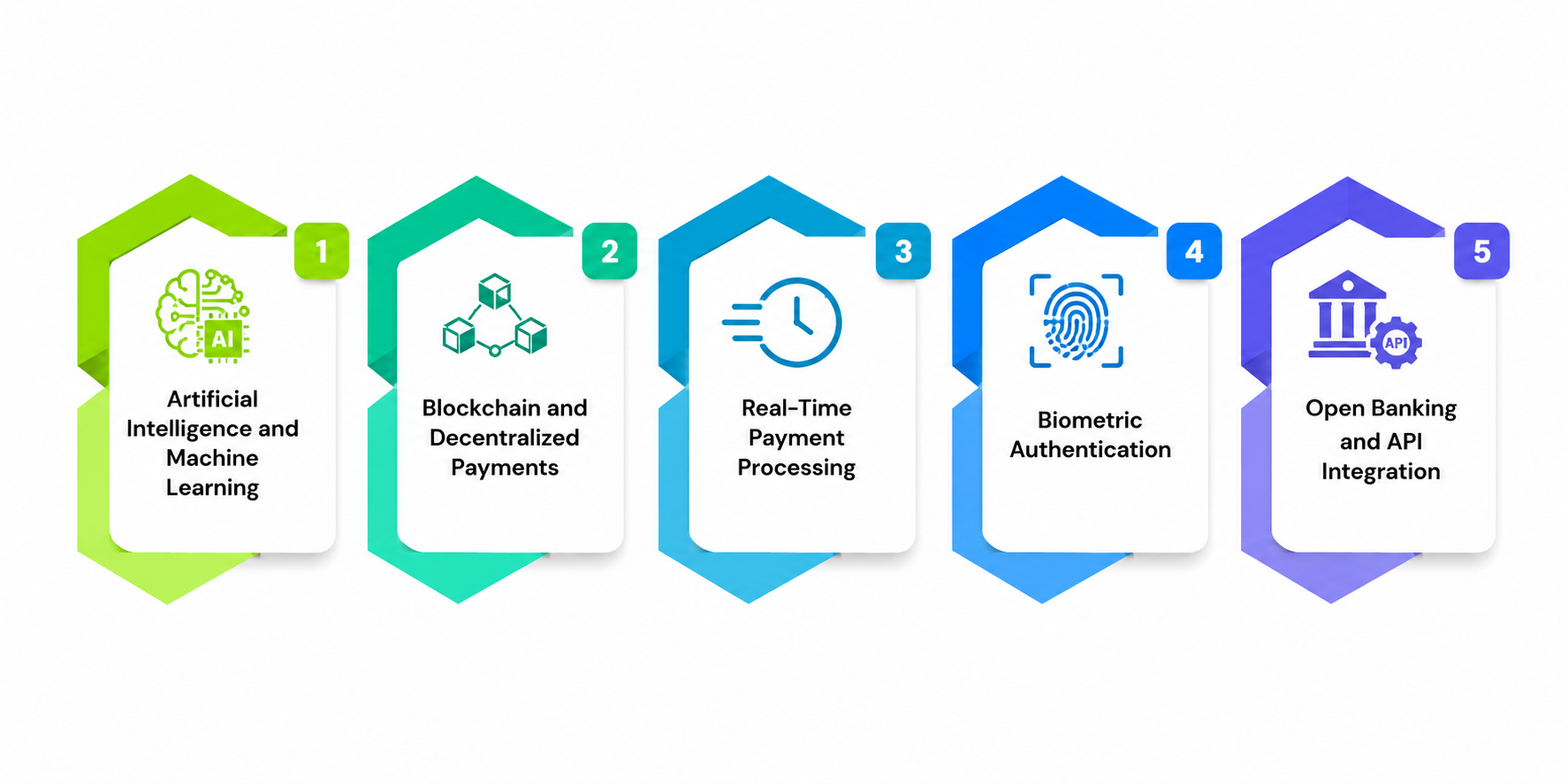
1. Artificial Intelligence and Machine Learning
AI and ML are transforming payment systems by detecting fraudulent activities in real time, automating transaction monitoring, and delivering personalized payment experiences. These technologies help businesses reduce financial risks while improving transaction accuracy and customer satisfaction.
2. Blockchain and Decentralized Payments
Blockchain technology enhances payment security by creating transparent, tamper-proof transaction records. It also simplifies cross-border payments by reducing intermediaries, lowering transaction costs, and improving settlement speed.
3. Real-Time Payment Processing
Businesses and consumers increasingly expect instant payment confirmations and fund transfers. Real-time payment (RTP) systems enable 24/7 transactions, improving cash flow, customer convenience, and operational efficiency.
4. Biometric Authentication
Passwords and PINs are gradually being replaced by biometric authentication methods such as fingerprint scanning, facial recognition, and voice recognition. These technologies provide stronger security while making payments faster and more convenient.
5. Open Banking and API Integration
Open Banking allows financial institutions to securely share customer data with authorized third-party providers through APIs. This enables businesses to build innovative financial services, improve payment experiences, and streamline banking operations.
Conclusion
As the world moves toward a cashless economy, digital payment systems have become a vital component of modern business operations. They not only simplify financial transactions but also enhance customer experiences, improve operational efficiency, strengthen security, and support business scalability. From mobile wallets and payment gateways to AI-driven fraud detection and real-time payments, investing in a robust digital payment solution enables businesses to stay competitive in an increasingly digital marketplace.
At ToXSL Technologies, we specialize in developing custom digital payment systems tailored to the unique needs of startups, enterprises, and financial institutions. Our team delivers end-to-end payment solutions with advanced security, seamless third-party integrations, regulatory compliance, and scalable architectures designed to support business growth. Whether you're building a fintech platform, mobile wallet, payment gateway, or enterprise payment solution, ToXSL Technologies has the expertise to transform your vision into a secure, reliable, and future-ready digital payment ecosystem. Contact us to learn more.
Frequently Asked Questions
1. What is a digital payment system?
A digital payment system is a technology-driven platform that enables individuals and businesses to transfer money electronically without using physical cash. These systems facilitate secure transactions through payment gateways, mobile wallets, internet banking, QR codes, and contactless payment methods. They simplify financial transactions, improve payment speed, and enhance customer convenience while maintaining high levels of security.
- Enables cashless transactions
- Supports online and offline payments
- Uses secure payment technologies
- Reduces manual payment processing
- Improves transaction efficiency
2. Why should businesses invest in a digital payment system?
Digital payment systems help businesses improve customer satisfaction, streamline payment processing, reduce operational costs, and increase transaction security. They also provide access to real-time financial data, making it easier for businesses to monitor revenue, manage cash flow, and make informed financial decisions. As digital payments become the preferred payment method, investing in a reliable payment platform is essential for long-term growth.
- Faster payment processing
- Better customer experience
- Improved financial management
- Increased payment security
- Supports business growth
3. How much does it cost to develop a digital payment system?
The cost of developing a digital payment system depends on factors such as project complexity, features, security requirements, third-party integrations, regulatory compliance, and platform selection. A basic payment solution may cost between $30,000 and $60,000, while an enterprise-grade payment platform with advanced capabilities can exceed $250,000.
4. What security features should a digital payment system include?
Security is one of the most important aspects of any digital payment solution. A robust payment system should implement end-to-end encryption, tokenization, multi-factor authentication (MFA), fraud detection mechanisms, and compliance with standards such as PCI DSS. These features help protect sensitive financial data and reduce the risk of cyberattacks and fraudulent transactions.
- End-to-end encryption
- Tokenization of payment data
- Multi-factor authentication
- AI-powered fraud detection
- PCI DSS compliance
5. Which industries benefit the most from digital payment systems?
Digital payment systems are beneficial across almost every industry, including retail, eCommerce, healthcare, hospitality, logistics, education, fintech, travel, and real estate. Any business that processes customer payments can improve efficiency, security, and customer satisfaction by adopting a modern digital payment platform.
- Retail and eCommerce
- Healthcare providers
- Hospitality businesses
- Financial institutions
- Education and logistics sectors
6. How long does it take to build a digital payment system?
The development timeline varies depending on the project's scope and complexity. A basic digital payment solution can typically be developed within 3 to 5 months, while a feature-rich enterprise payment platform with advanced integrations, compliance requirements, and AI capabilities may require 8 to 12 months or longer.