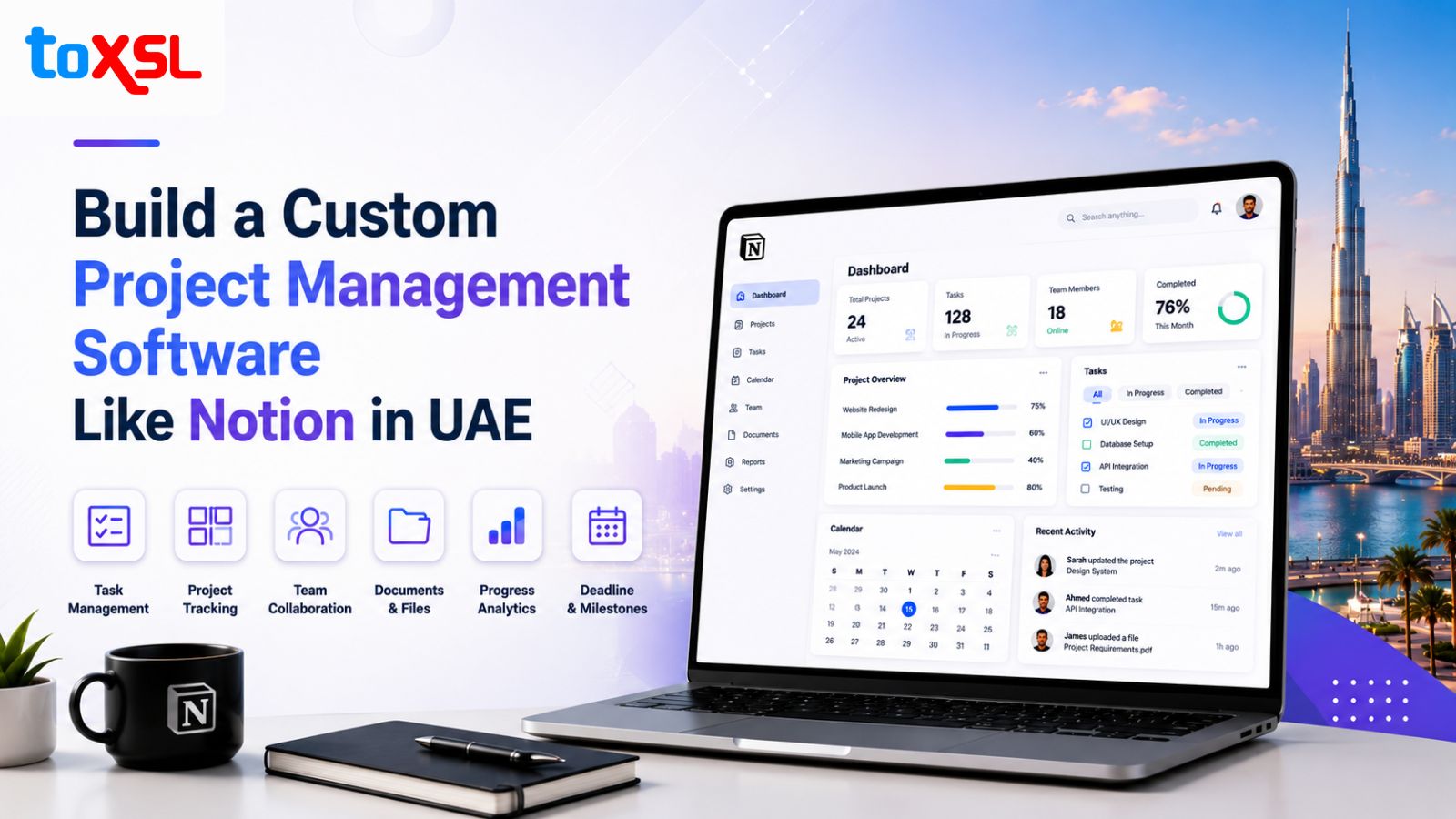
As businesses across the UAE continue their digital transformation journeys, the demand for advanced project management platforms has grown significantly. Organizations are increasingly looking beyond traditional task management tools and seeking customized solutions that align with their unique workflows, collaboration requirements, and business objectives. This growing need has fueled interest in building custom project management software similar to Notion.
Notion has become a popular platform because it combines project management, document collaboration, knowledge management, workflow automation, and team communication within a single environment. However, many organizations require tailored functionalities, enhanced security controls, region-specific compliance features, and seamless integration with their existing business systems. This is where custom project management software development becomes valuable.
This guide explores the essential aspects of building project management software like Notion in UAE, including core features, development costs, influencing factors, emerging trends, and how to choose the right development partner.
Key Takeaways
- Custom project management software provides greater flexibility and scalability than off-the-shelf solutions.
- Businesses can integrate project management, document collaboration, workflow automation, and communication tools into a single platform.
- Development costs vary based on features, complexity, integrations, security requirements, and deployment models.
- AI-powered automation and predictive analytics are transforming modern project management platforms.
- UAE businesses benefit from customized solutions that align with regional regulations and organizational requirements.
- Choosing an experienced software development partner significantly impacts project success, scalability, and long-term ROI.
Understanding Custom Project Management Software
Custom project management software is a tailored digital platform designed to help organizations plan, organize, execute, monitor, and optimize projects according to their specific operational needs. A project management platform similar to Notion typically combines multiple business functions into a unified workspace. Teams can create project boards, manage tasks, collaborate on documents, automate workflows, track performance metrics, and maintain organizational knowledge within one centralized environment.
Modern project management software supports various industries including construction, healthcare, education, finance, technology, logistics, manufacturing, and professional services. As businesses grow, these platforms can be expanded with additional modules, advanced reporting systems, AI capabilities, and third-party integrations.
Key Benefits of Custom Project Management Software for Modern Businesses
Custom project management software in Middle East has become a strategic investment for organizations seeking greater operational efficiency, improved collaboration, and enhanced control over business processes.
Unlike generic project management tools, custom-built solutions are specifically designed around an organization's workflows, objectives, and operational requirements. This level of personalization enables businesses to eliminate inefficiencies, improve productivity, and create scalable systems that support long-term growth.
1. Centralized Project Visibility
One of the most significant advantages of custom project management software is the ability to provide a unified view of all projects, tasks, resources, and timelines. Instead of relying on multiple disconnected tools, organizations can access critical project information from a single platform. Centralized visibility allows managers and stakeholders to monitor project progress, identify bottlenecks, track deadlines, and make informed decisions quickly.
Benefits:
- Improved transparency
- Better resource tracking
- Faster decision-making
- Enhanced accountability
- Reduced information silos
2. Improved Team Collaboration
Effective communication is essential for successful project execution. Custom project management software facilitates seamless collaboration by bringing employees, managers, clients, and stakeholders together within a centralized workspace. Team members can share updates, collaborate on documents, assign tasks, exchange feedback, and communicate in real time without switching between multiple applications.
Benefits:
- Shared document management
- Faster information sharing
- Reduced email dependency
- Better team coordination
- Improved remote collaboration
3. Workflow Automation and Process Optimization
Manual processes often consume valuable time and increase the likelihood of errors. Custom project management software can automate repetitive tasks such as task assignments, notifications, approvals, reminders, status updates, and reporting activities. Automation helps organizations streamline operations, reduce administrative burdens, and ensure consistency across workflows.
Benefits:
- Automated task allocation
- Smart notifications and alerts
- Faster approval workflows
- Reduced human errors
- Enhanced productivity
4. Customized Workflows and Flexibility
Every organization operates differently, and standard project management tools often fail to accommodate unique business processes. Custom software allows companies to build workflows, dashboards, project templates, and reporting structures tailored specifically to their operational requirements. This flexibility enables organizations to maintain their preferred processes instead of adapting to software limitations.
Benefits:
- Personalized workflows
- Custom dashboards
- Flexible project structures
- Tailored reporting systems
- Better process alignment
5. Enhanced Resource Management
Efficient resource allocation is critical for project success. Custom project management software helps organizations track employee workloads, manage project resources, monitor capacity utilization, and optimize team performance. Managers can gain visibility into resource availability, identify overutilized or underutilized team members, and make informed decisions regarding project assignments.
Benefits:
- Capacity planning tools
- Workload management
- Improved scheduling
- Better utilization rates
- Reduced resource conflicts
6. Data-Driven Decision Making
Modern project management platforms generate valuable business intelligence through analytics, dashboards, and reporting tools. Custom software can be configured to track the metrics and key performance indicators that matter most to an organization.
These insights help executives and project managers evaluate project performance, forecast outcomes, identify risks, and make strategic decisions based on accurate data rather than assumptions.
Benefits:
- KPI monitoring
- Predictive insights
- Risk identification
- Executive reporting
- Better forecasting
7. Stronger Data Security and Compliance
Organizations handling sensitive business information require robust security measures. Custom project management software can be developed with advanced security features that align with organizational policies and industry regulations.
Businesses can implement role-based access controls, multi-factor authentication, and compliance frameworks to ensure information remains protected against unauthorized access and cyber threats.
Benefits:
- Data encryption
- Compliance support
- Secure document storage
- Audit trail management
- Reduced security risks
8. Seamless Third-Party Integrations
Modern businesses rely on multiple software solutions to manage operations. Custom project management software can integrate seamlessly with CRM systems, ERP platforms, accounting software, communication tools, cloud storage solutions, and other business applications.
Benefits:
- CRM integration
- ERP connectivity
- Cloud storage support
- Automated data exchange
- Improved workflow continuity
Project Management Software Development Cost Analysis
The cost of developing custom project management software like Notion depends on feature complexity, design requirements, technology stack, integrations, deployment infrastructure, and development team expertise.
A simple platform with basic task management features may require a lower investment, while enterprise software with AI automation, analytics, workflow management, and advanced security capabilities demands significantly higher budgets.
Estimated Development Cost Breakdown
Development Stage | Estimated Cost (USD) |
Business Analysis & Planning | $5,000 – $15,000 |
UI/UX Design | $8,000 – $25,000 |
Frontend Development | $15,000 – $50,000 |
Backend Development | $20,000 – $80,000 |
Database Development | $5,000 – $20,000 |
API Integrations | $5,000 – $30,000 |
Workflow Automation Features | $10,000 – $40,000 |
AI-Powered Capabilities | $15,000 – $60,000 |
Testing & Quality Assurance | $5,000 – $20,000 |
Deployment & Launch | $3,000 – $10,000 |
Ongoing Maintenance (Annual) | 15%–25% of Development Cost |
Overall Project Cost
Project Complexity | Estimated Cost Range |
Basic Solution | $30,000 – $70,000 |
Mid-Level Platform | $70,000 – $150,000 |
Enterprise Platform | $150,000 – $500,000+ |
Major Factors Influencing Custom Project Management Software Development Cost
The cost of developing custom project management software depends on a wide range of technical, operational, and business-related factors. While many organizations focus primarily on the number of features they want to include, the overall development budget is influenced by much more than functionality alone.
1. Feature Complexity and Functionality
The scope and complexity of features play a major role in determining development costs. A basic project management platform with task creation, project tracking, and team collaboration capabilities will require significantly less investment than an enterprise-grade solution that includes workflow automation, AI-powered recommendations, advanced analytics, and custom reporting tools.
2. User Roles, Permissions, and Access Controls
Project management software is typically used by multiple stakeholders, including administrators, managers, team leaders, employees, clients, and external partners. Each user category may require different levels of access to projects, documents, reports, workflows, and system settings. Developing a role-based access control system increases development complexity because permissions must be configured accurately across all modules and functionalities.
3. User Interface and User Experience Design
The quality of the user interface (UI) and user experience (UX) directly impacts both development costs and user adoption rates. A simple design with standard layouts may require relatively less investment, whereas a highly interactive, visually appealing, and intuitive interface demands more design and development resources.
4. Third-Party Integrations and API Development
Most businesses rely on multiple software systems to manage operations, including customer relationship management (CRM) platforms, enterprise resource planning (ERP) systems, accounting software, communication tools, cloud storage platforms, and business intelligence solutions.
5. Workflow Automation Requirements
Workflow automation has become a critical feature in modern project management platforms. Businesses increasingly seek solutions that automate repetitive tasks such as project approvals, task assignments, status updates, reminders, notifications, document routing, and reporting processes.
Emerging Trends Shaping the Future of Project Management Software
The project management software landscape continues to evolve rapidly, driven by technological innovation and changing workplace dynamics.
1. Artificial Intelligence Integration
Artificial intelligence is transforming project management software by automating routine tasks, analyzing project data, and providing intelligent recommendations. AI-powered project management software can predict project risks, optimize resource allocation, forecast deadlines, and improve decision-making through data-driven insights.
2. Predictive Analytics
Modern project management platforms are moving beyond traditional reporting by leveraging predictive analytics to forecast project outcomes. By analyzing historical performance data, team productivity, resource utilization, and project timelines, these systems help managers identify potential bottlenecks before they occur.
3. No-Code and Low-Code Customization
Businesses are increasingly seeking project management software that allows users to create workflows, dashboards, and automations without extensive coding knowledge. No-code and low-code platforms empower business teams to customize processes quickly and efficiently while reducing dependence on development teams.
4. Real-Time Collaboration
The rise of remote and hybrid work environments has significantly increased the demand for advanced collaboration capabilities. Modern project management software now includes real-time document editing, instant messaging, video conferencing integration, collaborative workspaces, and shared project boards. These features help distributed teams stay connected, improve communication, and maintain productivity regardless of location.
5. Workflow Automation Process Management
Organizations are increasingly adopting workflow automation to streamline repetitive tasks and reduce manual intervention. Modern project management platforms automate approvals, notifications, task assignments, status updates, and reporting processes. Intelligent automation improves operational efficiency, minimizes errors, accelerates project execution, and allows employees to focus on more strategic business activities.
6. Cloud-Native Project Management Solutions
Cloud-based project management software continues to gain popularity due to its flexibility, scalability, and accessibility. Cloud-native solutions allow users to access project information from anywhere while benefiting from automatic updates, enhanced security, and reduced infrastructure costs. As businesses continue their digital transformation initiatives, cloud deployment remains a preferred approach for project management platforms.
How to Choose the Right Project Management Software Development Partner
Selecting the right software development partner is essential for building a successful project management platform. The ideal partner should possess strong technical expertise, industry knowledge, and a proven ability to deliver scalable and secure solutions. Below are eight key factors businesses should consider when choosing a project management software development company.
1. Evaluate Industry Experience
A development partner with experience in building project management solutions understands common challenges, user expectations, and industry best practices. Their expertise helps streamline development, reduce risks, and ensure the software aligns with real-world business requirements.
2. Assess Technical Expertise
The development company should have strong proficiency in modern technologies, including frontend and backend frameworks, cloud platforms, databases, APIs, and DevOps practices. Technical expertise ensures the software is scalable, secure, high-performing, and capable of supporting future business growth.
3. Review Their Development Methodology
A structured mobile app development process is critical for successful project execution. Companies that follow Agile or Scrum methodologies provide better transparency, regular updates, faster iterations, and continuous improvements throughout the development lifecycle, ensuring the final product meets business objectives.
4. Examine UI/UX Design Capabilities
An intuitive and user-friendly interface directly impacts software adoption and productivity. The development partner should have proven expertise in creating engaging user experiences, streamlined workflows, responsive designs, and customizable dashboards that simplify project management activities for users.
5. Verify Security and Compliance Expertise
Project management software often contains sensitive business information, making security a top priority. The right partner should implement robust security measures such as encryption, role-based access controls, secure authentication mechanisms, and compliance standards to protect organizational data and minimize cybersecurity risks.
6. Evaluate Integration and Customization Capabilities
Modern businesses rely on multiple software systems. A capable development partner should be able to integrate the project management platform with CRM software, ERP systems, communication tools, cloud storage solutions, and third-party applications while also offering extensive customization options tailored to business workflows.
7. Support and Maintenance Services
Software development does not end after deployment. Ongoing maintenance, performance monitoring, bug fixes, security updates, and feature enhancements are essential for long-term success. Choose a partner that offers reliable support services and long-term technical assistance.
8. Review Client Testimonials
Past projects provide valuable insights into a company's expertise and reliability. Reviewing client testimonials, case studies, and project portfolios helps businesses evaluate the development partner's ability to deliver successful solutions, meet deadlines, maintain quality standards, and achieve client satisfaction.
Conclusion
Building custom project management software like Notion presents a significant opportunity for businesses across the UAE to streamline operations, improve collaboration, and create highly efficient digital workplaces. A customized platform allows organizations to align project workflows, document management, communication systems, and automation capabilities with their unique business requirements while maintaining complete control over security, scalability, and performance.
As technologies such as artificial intelligence, workflow automation, cloud computing, and advanced analytics continue to evolve, investing in a tailored project management solution can deliver substantial long-term value and competitive advantages.
At ToXSL Technologies, we specialize in developing scalable, secure, and feature-rich custom software solutions tailored to modern business needs. Our experienced development team helps organizations transform ideas into powerful project management platforms that drive productivity, enhance collaboration, and support sustainable business growth. Whether you are a startup, SME, or enterprise, we can help you build a future-ready solution designed specifically for your organization.
Frequently Asked Questions
1. Why should businesses invest in custom project management software instead of off-the-shelf solutions?
Custom project management software offers greater flexibility, scalability, and control compared to generic platforms. Organizations can design features and workflows that align directly with their operational goals.
Key Advantages:
- Tailored business workflows
- Enhanced security controls
- Better scalability
- Seamless integrations
- Long-term cost efficiency
2. How long does it take to develop project management software like Notion?
Development timelines depend on project complexity, features, integrations, and customization requirements. Basic solutions may take a few months, while enterprise-grade platforms require longer development cycles.
Factors Affecting Timeline:
- Feature requirements
- UI/UX complexity
- Integration scope
- Security implementation
- Testing requirements
3. What essential features should be included in a project management platform?
A successful platform combines project tracking, collaboration, document management, workflow automation, and reporting capabilities.
Core Features Include:
- Task management
- Project dashboards
- Document collaboration
- Workflow automation
- Analytics and reporting
4. How can custom project management software improve business productivity?
By centralizing information and automating repetitive processes, organizations can reduce inefficiencies and improve operational performance.
Productivity Benefits:
- Faster project execution
- Improved collaboration
- Better resource allocation
- Reduced manual work
- Increased transparency
5. How do businesses choose the right software development company?
Organizations should evaluate technical expertise, industry experience, security capabilities, and long-term support services before selecting a development partner.
Evaluation Criteria:
- Proven portfolio
- Technical expertise
- Security standards
- Development methodology
- Ongoing support capabilities