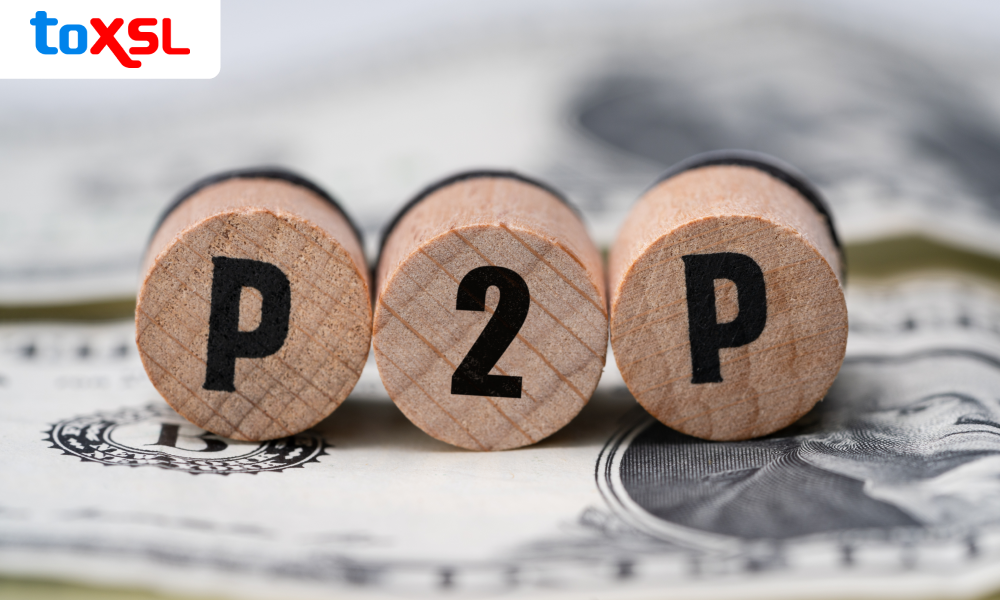
The global P2P payment market was valued at approximately $3.63 trillion in 2025 and is projected to expand rapidly, with some estimates forecasting it could exceed $16 trillion by 2034, growing at a strong CAGR of around 18 % over the next decade. This extraordinary growth reflects increasing smartphone usage, widespread internet access, and a shift toward cashless transactions across both developed and emerging economies.
In real-world usage, platforms such as Zelle processed nearly $600 billion in transactions in just the first half of 2025, marking a 23 % year-over-year increase, while cross-border P2P activity expanded over 50 % in the same period. Meanwhile, consumer behavior data shows that about 84 % of mobile wallet users rely on P2P transfers, highlighting how essential these services have become for everyday financial interactions.
Key Takeaways
- The global P2P payment market is growing rapidly, driven by smartphone adoption, cashless economies, and increasing consumer trust in digital transfers.
- P2P payment apps enable fast, direct, and secure money transfers by linking users’ bank accounts, cards, or digital wallets through mobile platforms.
- Successful P2P apps rely on strong business models such as transaction fees, subscriptions, merchant partnerships, and cross-selling financial services.
- Security, regulatory compliance, scalability, and seamless user experience remain the biggest challenges in P2P payment app development.
- Partnering with an experienced fintech development company helps businesses build scalable, secure, and future-ready P2P payment solutions.
Understanding the Basics
Peer-to-peer (P2P) payment apps have fundamentally transformed the way people send, receive, and manage money. Unlike traditional payment methods, which rely heavily on banks or financial institutions as intermediaries, P2P apps allow users to transfer funds directly to one another using mobile devices or web platforms. This seamless, instant approach eliminates the need for checks, cash, or even ATM visits, making financial transactions faster, more convenient, and increasingly popular in a digitally connected world.
At its core, a P2P payment app acts as a bridge between individuals, managing user balances, processing transactions, and ensuring security throughout the transfer process. The app can link to a user’s bank account, debit card, credit card, or digital wallet, allowing for instant fund transfers and real-time balance updates. The increasing adoption of smartphones, coupled with the global push toward cashless economies, has fueled the popularity of these platforms. According to Statista, the number of global P2P payment users is projected to reach over 1.3 billion by 2026, reflecting rapid consumer adoption across all age groups.
How P2P Payment Apps Work
Although the concept sounds simple, P2P payment apps rely on complex backend technology to ensure smooth and secure transactions. Here’s a simplified breakdown of how these apps typically operate:
- User Registration: Users create accounts using personal details such as email, phone number, or social media credentials. The app often requires identity verification to comply with regulatory standards like KYC (Know Your Customer).
- Linking Payment Methods: Users connect their bank accounts, debit/credit cards, or other funding sources to the app. This enables them to transfer money or receive payments without leaving the platform.
- Transaction Initiation: When sending money, the user enters the recipient’s phone number, email, or unique ID, specifies the amount, and confirms the transaction.
- Processing & Security: The app processes the payment through encrypted channels, often leveraging secure payment gateways. Sophisticated fraud detection algorithms monitor transactions in real time to prevent unauthorized activity.
- Instant Notification: Both sender and receiver receive notifications confirming the transaction. Some apps even allow instant transfers to bank accounts or digital wallets.
Business Models of P2P Payment App in Dubai
Developing a successful P2P payment app requires more than just robust technology - it also demands a viable business model that ensures profitability while keeping users engaged. Over the years, P2P apps have experimented with multiple revenue strategies, each with its own advantages and challenges. Let’s take a closer look at the main business models.
1. Transaction Fee Model
One of the most common revenue strategies for P2P apps is charging a small fee per transaction. For example, Venmo charges a 3% fee on credit card transfers and instant bank transfers, while standard bank transfers are usually free. This model works well because it directly ties revenue to user activity. However, a high transaction fee may deter cost-sensitive users, so it must strike a balance between profitability and affordability.
2. Freemium Model
In this model, the app is free to use for basic functions but offers premium features at a cost. For instance, Cash App allows free standard transfers but charges for instant transfers. Premium offerings can include higher transfer limits, multi-currency support, and priority customer support. Freemium models are particularly effective in building a large user base while generating revenue from a smaller percentage of power users.
3. Subscription Model
Some apps provide subscription-based services for users seeking advanced features or exclusive benefits. For example, a subscription could include enhanced security, higher transaction limits, cashback offers, or financial insights. Subscription models guarantee recurring revenue, making it easier for developers to plan long-term. However, users will only subscribe if they perceive tangible value beyond the free features.
4. Merchant Partnerships
P2P apps can partner with merchants to facilitate payments. Each transaction processed for a merchant generates a small commission. PayPal, for instance, earns a significant portion of revenue through business and merchant transactions. This model can be especially lucrative in e-commerce or retail sectors, where frequent micro-transactions occur.
5. Cross-Selling Financial Services
P2P apps are in a unique position to cross-sell financial products such as loans, insurance, investment services, or cryptocurrency trading. By leveraging the trust and engagement built with users, apps can introduce new offerings without heavy marketing costs. For instance, Cash App allows users to buy stocks and Bitcoin directly within the app, creating multiple revenue streams.
6. Advertising and Data Monetization
While less common, some apps leverage advertisements or aggregated, anonymized data for revenue. Ads can be targeted promotions, while insights from user spending patterns can help brands understand consumer behavior. Privacy compliance is essential here to avoid legal issues and maintain user trust.
Must-Have Features in a P2P Payment App
Creating a successful P2P payment app in Dubai requires more than just the ability to transfer money. Users today demand an experience that is fast, secure, convenient, and feature-rich. Below is an expanded overview of the must-have features your app should include.
1. User Registration and Onboarding
The registration and onboarding process sets the tone for the user experience. It must be simple, intuitive, and secure to prevent early drop-offs. Users should be able to sign up using multiple options such as email, phone number, social media accounts, or government-issued IDs. Incorporating KYC (Know Your Customer) verification ensures regulatory compliance and prevents fraudulent accounts. Additionally, guided onboarding, such as tutorials or walkthroughs, helps first-time users understand the app’s functionality, while biometric verification, like fingerprint or face recognition, adds an extra layer of security and convenience.
2. Bank Account, Card, and Wallet Integration
A P2P app must seamlessly connect to users’ financial accounts to facilitate smooth transactions. Users should be able to link multiple bank accounts, debit cards, and credit cards to their profile. Integration with popular digital wallets and payment gateways allows flexibility in funding transfers or receiving payments. Real-time verification of bank details ensures that transactions are successful on the first attempt, preventing user frustration. Advanced features like multi-currency wallets or integration with regional instant payment systems enable cross-border transactions and expand the app’s reach.
3. Send and Receive Money
The core functionality of any P2P app is the ability to send and receive money quickly and effortlessly. Users should be able to initiate transfers using phone numbers, email addresses, QR codes, or unique app IDs. Offering both standard transfers and instant transfers with optional fees caters to different user preferences. Additionally, the ability to request money from others for shared expenses adds convenience. Personalizing transactions with notes or emojis improves user experience, while advanced functionality like splitting payments among multiple users increases engagement and utility.
4. Transaction History and Reports
Transparency and record-keeping are crucial to building trust with users. A P2P app should provide a detailed transaction history showing sender, receiver, amount, date, and status of each transaction. Users should also be able to export their transaction history in formats such as PDF or CSV for accounting or record purposes. Features such as search, filters, and notifications for recurring transactions or suspicious activity enhance usability. For a more advanced experience, apps can provide analytics dashboards to help users visualize spending patterns or manage budgets.
5. Security and Fraud Prevention
Security is non-negotiable in financial apps. Users must feel confident that their money and personal data are protected. A P2P app should implement end-to-end encryption for all transactions and support two-factor authentication via SMS, email, or authenticator apps. Real-time fraud detection systems powered by AI or machine learning can identify suspicious activity and prevent unauthorized transfers. Device-based login alerts and biometric verification for transaction approvals further protect users. Compliance with standards like PCI-DSS for card payments ensures the app meets industry security requirements.
6. Push Notifications and Alerts
Notifications play a key role in keeping users informed and engaged. Users should receive instant alerts for sent, received, failed, or pending transactions. Notifications can also be used for promotions, app updates, or security alerts, such as unusual login attempts. Personalizing notifications based on user behavior helps maintain engagement and can increase transaction frequency while keeping users aware of important events within the app.
7. Wallet and Balance Management
A digital wallet allows users to hold funds within the app for instant transfers or payments. Users should be able to check their balance and transaction history in real time, top up wallets through linked bank accounts or cards, and withdraw funds when needed. Advanced wallet features such as multi-currency support enable cross-border transactions. Some apps also offer automatic fund allocation, where incoming money can be divided between spending, savings, or investments, providing added financial management functionality.
8. QR Code and Contactless Payments
QR code and contactless payments are increasingly popular due to their speed and ease of use. Users should be able to generate their own QR codes for receiving money or scan merchant and peer QR codes to send payments instantly. Integrating NFC or contactless tap payments can further streamline in-person transactions. Supporting retail point-of-sale systems allows the app to be used both for peer-to-peer transfers and commercial payments, increasing its utility.
9. Bill Splitting and Group Payments
Shared expenses are common in modern social and work environments. A P2P app should allow users to split bills evenly or assign custom amounts for each participant. Users should be able to track who has paid and send reminders to those who still owe money. This feature increases the app’s engagement and provides a practical solution for roommates, friends, or colleagues managing shared costs.
10. Customer Support and Dispute Resolution
Reliable customer support is essential for handling financial transactions. The app should provide multiple support options, such as in-app chat, live calls, or AI-powered chatbots. Users should be able to easily resolve disputes for failed, incorrect, or fraudulent transactions. A comprehensive FAQ section helps answer common questions, reducing support tickets. AI tools can automate repetitive queries while escalating complex issues to human agents, improving response times and user satisfaction.
Key P2P Payment App Development Challenges
Developing a P2P payment app is not without its hurdles. Unlike typical apps, P2P apps deal with sensitive financial information, require regulatory compliance, and must deliver a flawless user experience. Understanding these challenges early is essential for successful development.
1. Security and Fraud Prevention
Security is the most critical challenge. P2P apps must protect user data, financial information, and transactions from hacking, phishing, or fraud. Developers need to implement end-to-end encryption, secure APIs, multi-factor authentication, and AI-powered fraud detection. Balancing high security with a smooth user experience is tricky, as overly complicated authentication can frustrate users.
2. Regulatory Compliance
Financial apps are heavily regulated in most countries. Compliance with KYC (Know Your Customer), AML (Anti-Money Laundering), PCI-DSS (Payment Card Industry Data Security Standard), and data protection laws like GDPR or CCPA is mandatory. Navigating different regulations across regions can be complex, especially for apps targeting multiple markets. Delays in approvals can also impact launch timelines.
3. Integration with Payment Gateways
P2P apps must connect with multiple banking networks, card systems, and digital wallets. Each integration requires testing and secure data handling. Some banks may have restrictions, latency issues, or inconsistent APIs, making seamless transactions challenging.
4. Scalability and Performance
P2P apps need to process thousands of transactions per second, particularly during peak times. Ensuring high availability and low latency requires robust cloud infrastructure, load balancing, and efficient database design. Performance issues can lead to failed transactions and erode user trust.
5. User Experience Challenges
A P2P app must be simple, intuitive, and fast. Users expect instant transfers, real-time notifications, and easy navigation. Developing a user-friendly interface that meets these expectations while maintaining security and regulatory compliance is a fine balance.
6. Cross-Border Payment Issues
If the app supports international transfers, currency conversions, different banking systems, and foreign regulations introduce additional complexity. Exchange rate fluctuations and transfer fees must be managed transparently.
7. Building Trust
Trust is essential for a financial app. Any downtime, errors, or breaches can severely damage credibility. Developers must invest in security, transparency, and reliable support to earn and maintain user trust.
Cost of P2P App Development
The cost of developing a P2P payment app varies widely depending on features, platform, complexity, and region. A basic app with core features may cost significantly less than a fully-featured, multi-currency, cross-border payment app.
1. Development Phases Affecting Cost
Costs depend on the scope of work, including UI/UX design, backend development, frontend development, integration with banking and payment APIs, testing, and deployment. Additional costs include server hosting, security audits, and regulatory compliance.
2. Core vs. Advanced Features
Core features like registration, money transfers, transaction history, and wallet integration are more affordable. Adding advanced features like cryptocurrency support, bill splitting, analytics dashboards, and AI-powered fraud detection increases costs. Cross-border transfers and multi-currency support further elevate expenses.
3. Platform Choice
Developing for Android, iOS, or both affects cost. Cross-platform development can save time and money but may not fully utilize platform-specific capabilities. Native apps are often costlier but provide a superior user experience and better performance.
4. Team and Location
Developer rates vary by region. North America and Western Europe have higher rates, while Asia and Eastern Europe offer more cost-effective solutions. A team typically includes UI/UX designers, mobile developers, backend engineers, QA specialists, and project managers.
5. Maintenance Costs
Post-launch support, updates, security patches, and server maintenance contribute to ongoing expenses. On average, maintenance can account for 15–20% of initial development costs annually. In general, a basic P2P app may cost anywhere from $50,000 to $80,000, while a full-featured, scalable app can exceed $200,000 or more, depending on complexity and global integrations.
Factors Influencing P2P App Development
Several factors determine how a P2P app is designed, built, and launched successfully. Understanding these variables ensures a more targeted approach to development.
1. Target Audience: The demographics, tech-savviness, and financial behavior of users influence the design, features, and functionality. For example, millennials may prefer quick, social-enabled apps, while older users may prioritize simplicity and security.
2. Regulatory Environment: The rules in each region affect KYC processes, transaction limits, anti-fraud measures, and licensing requirements. Apps targeting multiple countries must adapt to each jurisdiction’s financial laws.
3. Market Competition: Competitor analysis helps define differentiation. If similar apps dominate a region, offering unique features like cryptocurrency support, AI-based budgeting, or social payments can attract users.
4. Technology Stack: Choices in programming languages, frameworks, cloud services, and security protocols impact development speed, scalability, and cost. High-performing apps require robust backend architecture and efficient APIs for banking and payment integration.
5. Integration Requirements: Compatibility with banks, payment gateways, and digital wallets is essential. Cross-border functionality may require additional APIs for currency conversion and local payment methods.
6. User Experience and Design: A seamless UX, intuitive navigation, and visually appealing interface increase adoption and retention. Accessibility and localization also play a role in widening the target market.
7. Security Considerations: Security protocols, encryption methods, fraud detection algorithms, and compliance measures directly influence development complexity. Strong security is non-negotiable for trust and regulatory approval.
Monetization Strategies for a P2P App
A P2P app can generate revenue through several strategies. Choosing the right monetization approach affects user adoption, retention, and profitability.
1. Transaction Fees
Charging a small fee for certain transactions, especially instant transfers or card payments, is a common model. Fees must be balanced to avoid deterring users while generating revenue.
2. Freemium Model
Basic services are free, while premium features, higher limits, or faster transfers require payment. Freemium encourages mass adoption while converting power users into paying customers.
3. Subscription Plans
Recurring monthly or annual subscriptions can provide benefits such as enhanced security, higher transaction limits, and advanced analytics. Predictable subscription revenue can stabilize cash flow.
4. Merchant Partnerships
Partnering with businesses allows the app to earn commissions on transactions, payment processing, or subscriptions. Merchant integration is especially profitable in regions with high consumer-to-business payments.
5. Cross-Selling Financial Products
Leveraging user trust, apps can offer loans, insurance, credit cards, investment options, or cryptocurrency trading. Multiple revenue streams diversify income and enhance user engagement.
6. Advertising and Data Insights
Carefully integrated ads or anonymized user spending insights can generate extra revenue. Compliance with privacy regulations is critical when using this strategy.
Many successful apps combine multiple strategies to create hybrid revenue models, balancing user adoption with sustainable income.
Conclusion
At ToXSL Technologies, we understand that developing a successful P2P payment app goes far beyond coding a simple money transfer platform. It requires a strategic combination of robust security, seamless user experience, regulatory compliance, and innovative features that meet evolving market demands. With the digital payments ecosystem growing at an unprecedented pace, businesses need apps that are scalable, reliable, and capable of offering value-added services such as wallet management, bill splitting, and cross-border transactions.
Our team at ToXSL Technologies leverages years of experience in fintech app development to help startups and enterprises transform their ideas into secure, user-friendly, and profitable P2P solutions. From ideation and design to development, testing, and post-launch support, we ensure every aspect of the app aligns with industry best practices and user expectations. By combining cutting-edge technology with deep market insights, we empower businesses to stay ahead of the competition and deliver exceptional digital payment experiences to their customers.
If you are looking to build a P2P payment app that is not just functional but also innovative, scalable, and trustworthy, ToXSL Technologies Dubai is your ideal partner for turning your vision into reality. Contact us today to learn more.
Frequently Asked Questions
1. What is a P2P payment app?
A P2P (peer-to-peer) payment app allows users to send and receive money directly from one person to another without using traditional banking intermediaries.
2. How much does it cost to develop a P2P payment app?
Development costs vary based on features, platform, complexity, and region. Basic apps may cost $50,000–$80,000, while advanced apps with cross-border functionality and additional services can exceed $200,000.
3. What are the essential features of a P2P app?
Essential features include user registration and KYC verification, money transfers, wallet integration, transaction history, security and fraud prevention, push notifications, QR code payments, bill splitting, and customer support.
4. What challenges are faced in P2P app development?
Key challenges include ensuring security, complying with financial regulations, integrating with banks and payment gateways, ensuring scalability and performance, maintaining excellent UX, and building user trust.
5. How do P2P apps make money?
P2P apps can monetize through transaction fees, freemium and subscription models, merchant partnerships, cross-selling financial products, and advertising or data monetization.
6. Which technologies are used in P2P app development?
Technologies often include mobile development frameworks (Swift, Kotlin, React Native), backend frameworks (Node.js, Django, Java), secure databases, cloud infrastructure, APIs for banking/payment integration, and AI/ML for fraud detection.