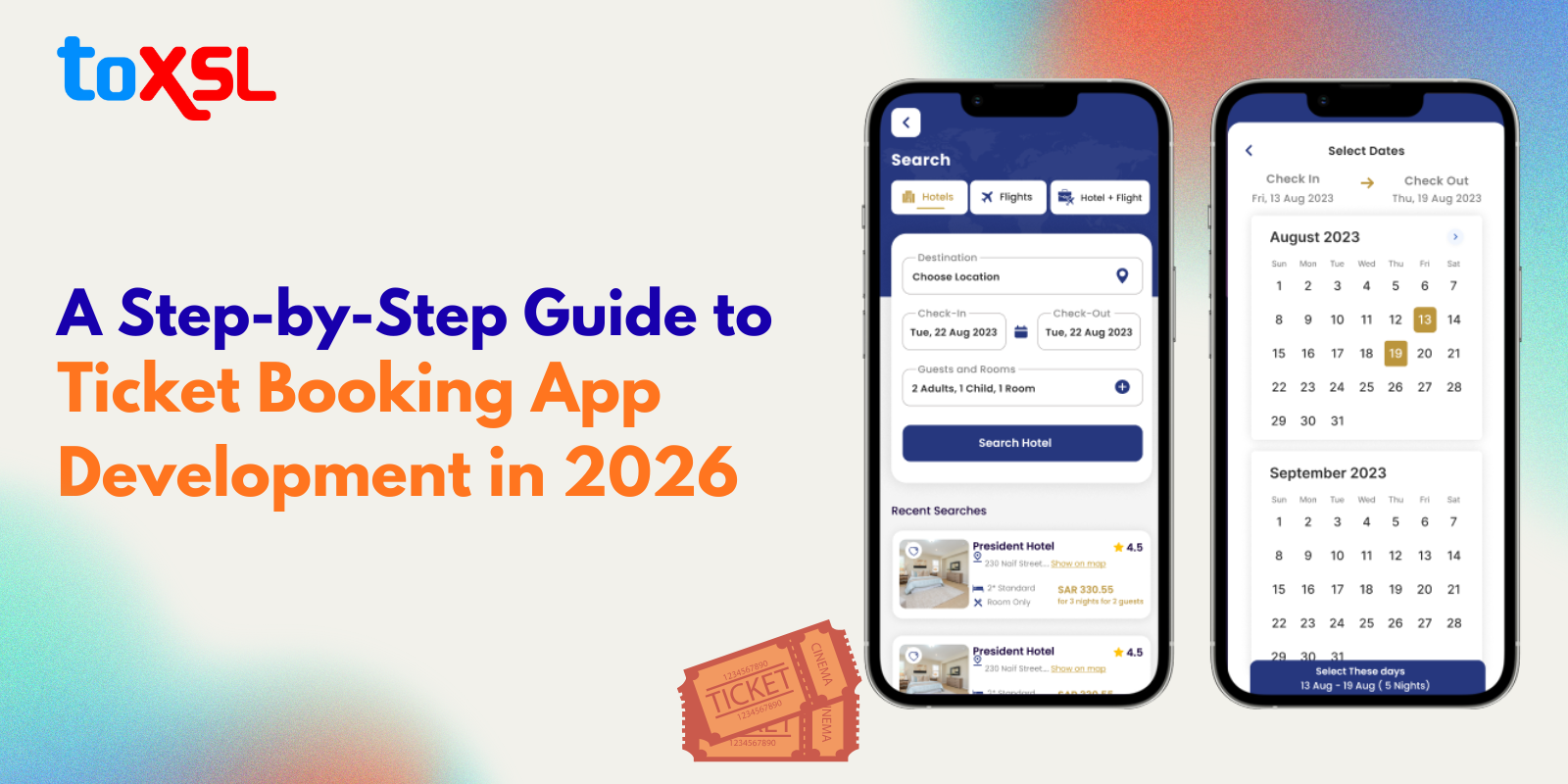
The digital revolution continues to reshape how we interact with services, experiences, and entertainment. Among the most transformative developments of the last decade has been the rise of ticket booking applications.
As 2026 unfolds, the market is more competitive and technologically advanced than ever, incorporating AI, augmented reality, hyper-personalization, intelligent recommendation systems, and blockchain-based payment ecosystems. For developers, businesses, and entrepreneurs, understanding the evolving ecosystem of ticket booking app development is critical to building solutions that not only delight users but also deliver strong ROI.
Key Takeaways
- The global online ticketing market is estimated to reach $53.7 billion in annual revenue.
- Speed, personalization, and seamless payments are core differentiators in ticket booking app success.
- Intelligent suggestions, dynamic pricing, and fraud detection systems are now standard expectations.
- Users expect native-type performance on both Android and iOS, while web booking remains relevant for desktops.
- Depending on features, integrations, and technologies used, app development can range from modest to enterprise-level investments.
- Dealing with payments, identity verification, and data privacy requires strict adherence to regulatory standards.
Ticket Booking App Development: Statistics
The ticketing industry has undergone a massive transformation over the past decade, and current statistics reflect soaring demand for digital solutions.
Ticket Booking App Development |
1. | Global Market Growth | As of 2033, the global online ticketing market is estimated to reach $53.7 billion in annual revenue, with projections continuing strong growth through 2026 and beyond. |
2. | Mobile First Usage | Over 70% of ticket purchases now occur on mobile devices, up from around 55% in the earlier part of the 2020s. |
3. | Travel Booking Trends | For travel tickets, more than 60% of users prefer app-based booking, largely due to convenience, and real-time updates. |
4. | Events and Entertainment | In sectors like concerts, sports, and theater, users increasingly opt for digital tickets with features such as QR codes and wallet integrations. |
5. | Consumer Behavior | A significant share of buyers now expects personalized event recommendations based on browsing history and purchase patterns. |
Benefits of Ticket Booking App Development
Ticket booking app development offers significant advantages for businesses, event organizers, travel companies, and end users. In 2026, these apps are no longer limited to simple booking functionality; they serve as intelligent digital ecosystems that enhance customer engagement, operational efficiency, and revenue generation. Below is a comprehensive breakdown of the key benefits of investing in ticket booking app development.
1. Seamless User Experience: One of the most prominent benefits of ticket booking apps is the unmatched convenience they offer. Users can browse events, compare prices, select seats, and confirm bookings within seconds, all from a single interface. Features such as saved preferences, autofill details, and one-click payments eliminate friction and reduce booking time. Additionally, intuitive UI/UX design ensures that even non-tech-savvy users can navigate the app with ease. Smooth animations, smart filters, and quick-loading pages enhance overall user satisfaction, increasing the likelihood of repeat bookings.
2. 24/7 Availability: Unlike physical ticket counters or call-based booking systems, ticket booking apps are accessible 24/7. This always-on availability allows users to book tickets at their convenience, regardless of time zones or geographical boundaries. For businesses, this translates into expanded market reach and increased revenue opportunities. An app allows ticket sellers to cater to both local and international audiences without investing in physical infrastructure, making it especially valuable for global events, travel services, and large-scale entertainment platforms.
3. Increased Sales: Ticket booking apps typically generate higher conversion rates compared to websites. Since users already have the app installed, the journey from discovery to purchase is shorter and more personalized. Saved payment details, loyalty rewards, and exclusive in-app offers encourage users to complete transactions rather than abandon carts. Push notifications further drive conversions by alerting users about flash sales, limited-time offers, seat availability, and upcoming events, prompting immediate action and boosting ticket sales.
4. Real-Time Updates: Real-time communication is crucial in the ticketing industry, particularly for travel and live events. Ticket booking apps enable instant notifications for booking confirmations, cancellations, delays, rescheduling, and venue changes. Users benefit from reduced uncertainty, while businesses can proactively manage customer expectations. Push notifications, SMS alerts, and in-app messages ensure that users stay informed and engaged at every stage of their journey.
5. Personalized Recommendations: Modern ticket booking apps leverage AI and machine learning to deliver personalized experiences. Based on browsing history, past purchases, location, and preferences, apps can suggest relevant events, movies, or travel options. This level of personalization not only enhances user satisfaction but also increases engagement and upselling opportunities. Users are more likely to explore events tailored to their interests, leading to longer app sessions and higher average order value.
6. Digital Ticketing: Digital tickets have become a standard expectation. QR codes, barcodes, and wallet integrations eliminate the need for physical tickets, reducing printing costs and environmental impact. For users, digital tickets offer easy access and reduced risk of loss. For event organizers, contactless scanning improves entry efficiency, reduces fraud, and enhances crowd management, especially at large venues.
7. Reduced Operational Costs for Businesses: By automating the booking process, ticket booking apps significantly reduce operational overhead. Businesses no longer need extensive staff to manage bookings, payments, or customer queries. Digital ticketing also minimizes costs associated with printing, logistics, and physical distribution. Over time, these savings contribute to improved profit margins and operational scalability.
8. Secure and Flexible Payment Options: Ticket booking apps support multiple payment methods, including credit/debit cards, digital wallets, UPI, net banking, and buy-now-pay-later services. Secure payment gateways with encryption and fraud detection mechanisms ensure safe transactions. This flexibility increases user trust and reduces transaction drop-offs. Secure refund processing further enhances customer confidence, particularly for high-value bookings.
9. Valuable Data Collection: Every interaction within a ticket booking app generates data. From search behavior and booking patterns to peak demand periods and popular events, this data provides actionable insights for businesses. Advanced analytics dashboards allow stakeholders to optimize pricing strategies, plan marketing campaigns, forecast demand, and improve event scheduling — all based on real user behavior.
10. Scalability and High Performance: Ticket booking apps are designed to handle traffic spikes during high-demand periods such as concert launches, festival seasons, or holiday travel. With cloud-based infrastructure and auto-scaling capabilities, apps can maintain performance even during sudden surges. This develops trust among users and prevents revenue loss caused by crashes or slow load times, a critical advantage in competitive markets.
Cost of Ticket Booking App Development
Understanding cost is crucial if you’re considering building a ticket booking application. The total cost can vary significantly based on many factors, but the major components include:
App Type / Complexity Level | Key Features Included | Estimated Development Time | Estimated Cost Range (USD) |
Basic Ticket Booking App | User registration & login, event/movie listing, basic search & filters, seat selection, ticket booking, payment gateway integration, booking confirmation | 3 – 5 months | $10,000 – $30,000 |
Mid-Level Ticket Booking App | Advanced search & filters, interactive seat maps, push notifications, multiple payment options, user profiles, booking history, basic analytics dashboard | 5 – 8 months | $25,000 – $75,000 |
Advanced Ticket Booking App | AI-based recommendations, dynamic pricing engine, real-time availability sync, loyalty & referral programs, in-app chat support, cloud scalability | 8 – 12 months | $70,000 – $100,000 |
Enterprise-Level Ticket Booking App | AR/VR seat previews, blockchain-based ticketing, advanced fraud detection, CRM & ERP integrations, multi-language & multi-currency support, high-traffic scalability | 12+ months | $80,000 – $120,000+ |
Cross-Platform Ticket Booking App | Single codebase for Android & iOS, core booking features, cloud backend, third-party API integrations | 4 – 7 months | $40,000 – $100,000 |
White-Label Ticket Booking Solution | Pre-built architecture, customizable branding, core booking & payment features, admin dashboard | 2 – 4 months | $15,000 – $40,000 |
Factors Affecting the Cost of Ticket Booking App Development
To better plan budget and strategy, let’s closely examine the cost-influencing factors:
- Feature Set: Adding features such as advanced search filters, personalized suggestions, live chat, seat maps, and loyalty points can progressively increase development hours and costs.
- Technology Stack: Choosing between native development versus cross-platform frameworks such as Flutter or React Native affects both initial cost and long-term maintenance costs.
- Backend Services: Using a cloud provider (AWS, Azure, Google Cloud) with auto-scaling capabilities adds to infrastructure cost but improves reliability and scalability.
- API Integrations: Payment gateway APIs (Stripe, PayPal, Razorpay), map services (Google Maps / Mapbox), and notification services (Twilio, Firebase) add both integration complexity and recurring costs.
- UI/UX Design Quality: High-end custom design results in more design iterations, prototyping, and graphic assets, all contributing to labor costs.
- Data Security & Compliance: Adhering to regulations such as GDPR, PCI compliance, and local data protection laws requires investments in security audits and secure coding practices.
- Testing and Quality Assurance: Comprehensive QA across devices and OS versions increases labor hours and ensures reduced bugs post-launch.
- Marketing & Launch: Marketing, app store optimization (ASO), and launch campaigns—often supported by a white label digital marketing agency—should also be factored into the overall budget, even though they are outside direct development costs.
How to Optimize Ticket Booking App Development Cost
Building a powerful app does not necessarily mean breaking the bank. Here are practical strategies to manage and optimize costs effectively:
- Start with an MVP: Launch a Minimum Viable Product (MVP) with core features to validate your idea, gather user feedback, and then iteratively improve, reducing upfront costs and risk.
- Use Cross-Platform Frameworks: Cross-platform development using Flutter or React Native allows you to build for Android and iOS simultaneously, saving time and development cost.
- Prioritize Features: Categorize features into Must-Have, Nice-to-Have, and Future Upgrades. This approach ensures your initial investment focuses on core functionality.
- Automate Testing: Automated testing tools help speed up QA cycles and reduce manual workload, especially useful for regression testing.
- Leverage Cloud Infrastructure: Cloud services like AWS Lambda, Firebase, or serverless architectures can save infrastructure costs and scale seamlessly based on usage.
- Outsource Strategically: Partnering with experienced development teams from cost-efficient regions can significantly reduce labor costs.
- Modular Architecture: Designing your app using modular, reusable components reduces future development time and makes updates easier.
- Monitor User Analytics: Use analytics tools to understand actual usage patterns, prioritize features that add real value, and remove or revise underused features.
Conclusion:
As the ticketing industry continues to evolve in 2026, ticket booking app development in Dubai has become a strategic necessity rather than a competitive advantage. With rising user expectations, increasing mobile adoption, and the integration of advanced technologies such as AI, cloud computing, and real-time analytics, businesses must invest in scalable, secure, and user-centric digital ticketing solutions to stay relevant.
At
ToXSL Technologies, we understand that a successful ticket booking app is more than just seamless transactions; it is about delivering exceptional user experiences, ensuring high performance during peak demand, and building future-ready platforms that grow with your business. Our expertise in custom mobile app development enables us to design and develop robust ticket booking solutions tailored to diverse industries, including travel, entertainment, events, and transportation.
As digital ticketing continues to shape customer behavior, partnering with an experienced technology provider can make all the difference. With ToXSL Technologies as your mobile app development partner in the UAE, you gain a future-ready ticket booking app designed to enhance customer engagement, maximize revenue, and drive long-term success in an increasingly competitive market. Contact us to learn more.
Frequently Asked Questions
1. How long does ticket booking app development take?
Development time depends on complexity. A basic app can take 3–6 months, while an advanced app with AI and analytics features may take 9–12+ months.
2. What technology stack is best for ticket booking apps?
Common choices include:
- Frontend: Flutter, React Native, Swift, Kotlin
- Backend: Node.js, Python (Django/Flask), Ruby on Rails
- Database: PostgreSQL, MongoDB
- Cloud: AWS, Google Cloud, Azure
3. How do ticket booking apps make money?
Revenue streams include:
- Booking fees and service charges
- Advertising and promotions
- Subscription models
- Partnerships with event organizers
4. Is it necessary to integrate AI in ticket booking apps?
Not mandatory, but AI improves personalization, recommendations, dynamic pricing, and customer insights, increasing user engagement and retention.
5. What are the biggest challenges in ticket booking app development?
Common challenges include:
- Handling high traffic surges
- Ensuring secure payments and data protection
- Real-time inventory sync
- User-friendly UX across devices