Key Takeaways
- SaaS enables businesses to deliver cloud-based software without requiring users to install or maintain applications.
- Partnering with an experienced SaaS development company helps businesses build secure, scalable, and feature-rich software solutions.
- Modern SaaS applications offer flexibility, automatic updates, high availability, and cost-effective deployment.
- Cloud-native architecture makes SaaS platforms suitable for startups, SMEs, and large enterprises alike.
- Security, multi-tenancy, API integrations, and scalability are among the most important features of successful SaaS products.
- SaaS development costs vary depending on project complexity, features, integrations, security requirements, and development team location.
- Investing in custom SaaS development provides long-term business value through recurring revenue and improved customer experience.
Software as a Service (SaaS) has transformed the way organizations develop, deliver, and consume software. Instead of purchasing software licenses and installing applications on local machines, businesses now access cloud-based applications through web browsers or mobile devices with a subscription model. This approach significantly reduces infrastructure costs while improving accessibility, scalability, and operational efficiency.
Today's organizations require software that can quickly adapt to changing business needs, support remote workforces, integrate seamlessly with existing tools, and provide enterprise-grade security.
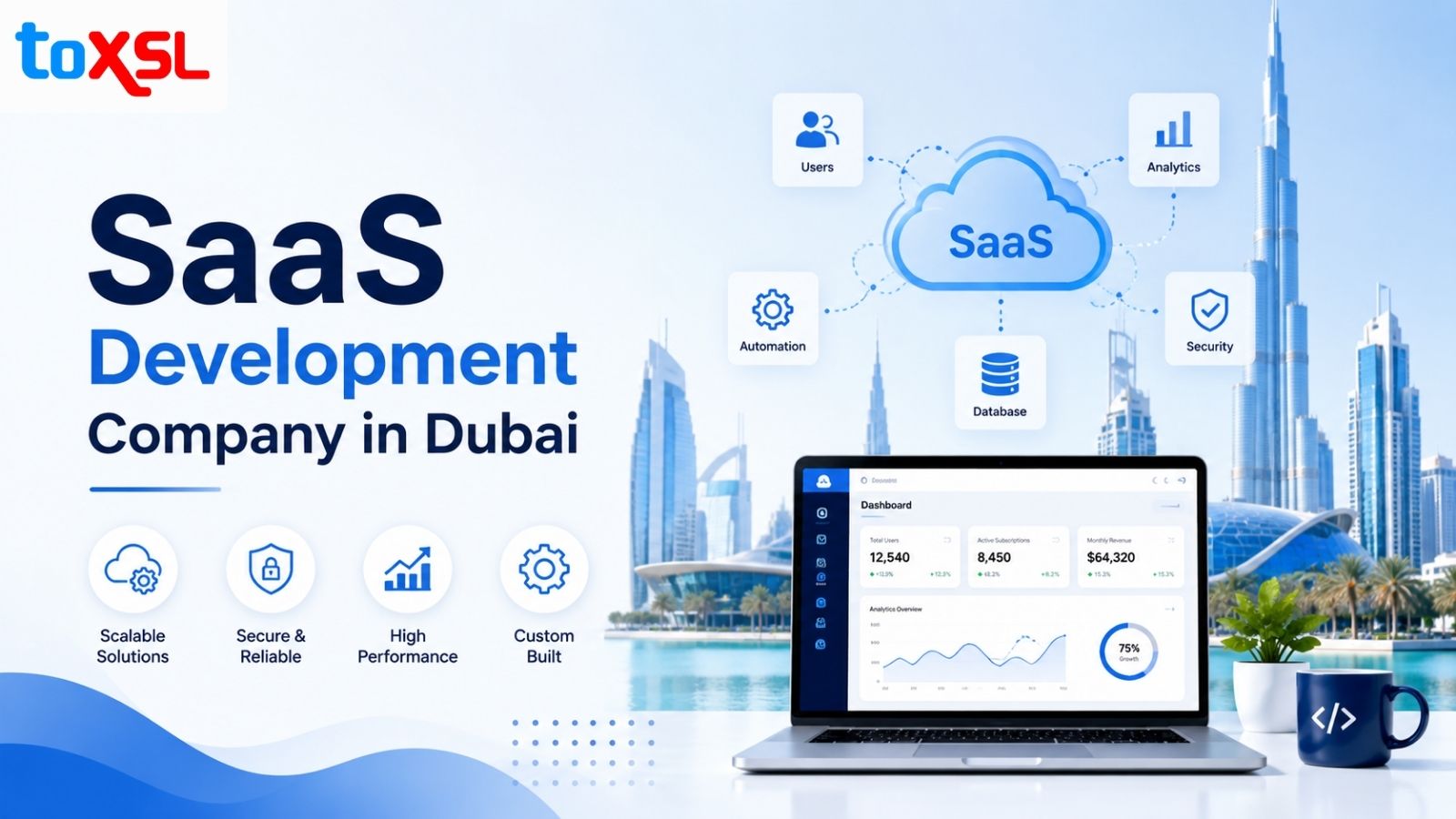
This is where a professional SaaS development company in Dubai plays a vital role. From product strategy and UI/UX design to cloud architecture, development, testing, deployment, and ongoing maintenance, experienced SaaS developers ensure businesses launch reliable and future-ready applications.
Whether you are a startup building your first SaaS product or an enterprise modernizing legacy software, choosing the right SaaS development partner can significantly impact your product's success.
The rapid growth of the SaaS industry demonstrates why businesses worldwide continue investing in cloud-based software solutions. According to Fortune Business Insights, the global SaaS market is projected to reach USD 1,482.44 billion by 2034, growing at a CAGR of 11.5%.
Why Investing in a Professional SaaS Development Company Creates Long-Term Business Value
Businesses across every industry are embracing SaaS solutions because they deliver flexibility, scalability, and continuous innovation. An experienced SaaS development company in Dubai helps organizations build secure cloud applications that not only solve today's challenges but also support future growth. Below are the key benefits of choosing professional SaaS development services.
1. Faster Time-to-Market
A reliable SaaS development company in Dubai follows agile development methodologies, reusable components, cloud-native architectures, and DevOps practices to reduce development cycles. This enables businesses to launch products faster, gather user feedback quickly, and continuously improve their software while staying ahead of competitors.
- Faster MVP development
- Reduced project timelines
- Continuous product releases
- Improved competitive advantage
2. Highly Scalable Infrastructure
Modern SaaS applications are built on cloud platforms that automatically scale resources according to user demand. Whether serving hundreds or millions of users, scalable architecture ensures consistent performance without requiring expensive infrastructure upgrades.
- Automatic resource scaling
- High application availability
- Better performance during peak traffic
- Lower infrastructure management costs
3. Reduced Operational Costs
Unlike traditional software, SaaS eliminates the need for costly on-premise servers, hardware maintenance, and manual software updates. Businesses only pay for cloud resources they consume, making SaaS a highly cost-effective solution for organizations of every size.
- Lower infrastructure expenses
- Reduced IT maintenance
- Predictable subscription revenue
- Improved operational efficiency
4. Enterprise-Grade Security
Security remains one of the most important aspects of SaaS development. Professional development companies implement data encryption, identity management, multi-factor authentication, secure APIs, regular security testing, and compliance standards to protect sensitive customer information.
- Data encryption
- Secure authentication
- Compliance readiness
- Reduced cybersecurity risks
5. Continuous Software Updates
Unlike traditional software installations, SaaS platforms receive automatic updates without disrupting users. Businesses can introduce new features, security patches, and performance improvements while ensuring customers always access the latest version.
- Automatic upgrades
- Improved user experience
- Reduced downtime
- Enhanced security
6. Easy Third-Party Integrations
Modern businesses rely on multiple software platforms for daily operations. SaaS applications integrate easily with payment gateways, CRM systems, ERP platforms, communication tools, analytics software, marketing platforms, and AI services through secure APIs.
- Better workflow automation
- Increased productivity
- Unified business operations
- Improved customer experiences
7. Better Customer Experience
Cloud-based SaaS applications offer intuitive interfaces, responsive performance, and accessibility across multiple devices. Customers enjoy consistent experiences whether they access the application from desktops, tablets, or smartphones.
- User-friendly interfaces
- Cross-device accessibility
- Faster application performance
- Higher customer satisfaction
8. Recurring Revenue Opportunities
For software providers, SaaS creates predictable subscription-based revenue instead of one-time software sales. This business model improves financial forecasting while encouraging continuous product innovation and customer retention.
- Predictable monthly revenue
- Higher customer retention
- Long-term profitability
- Business scalability
Essential Features Every Modern SaaS Application Should Include
A successful SaaS application is much more than just a cloud-based software solution. It should offer a seamless user experience, robust security, high performance, and the flexibility to adapt to evolving business needs. Modern SaaS platforms are designed to serve diverse customers while ensuring reliability, scalability, and efficient resource management. By incorporating the right features during the development phase, businesses can create software that improves productivity, enhances customer satisfaction, and supports sustainable growth. Below are the essential features every modern SaaS application should include.
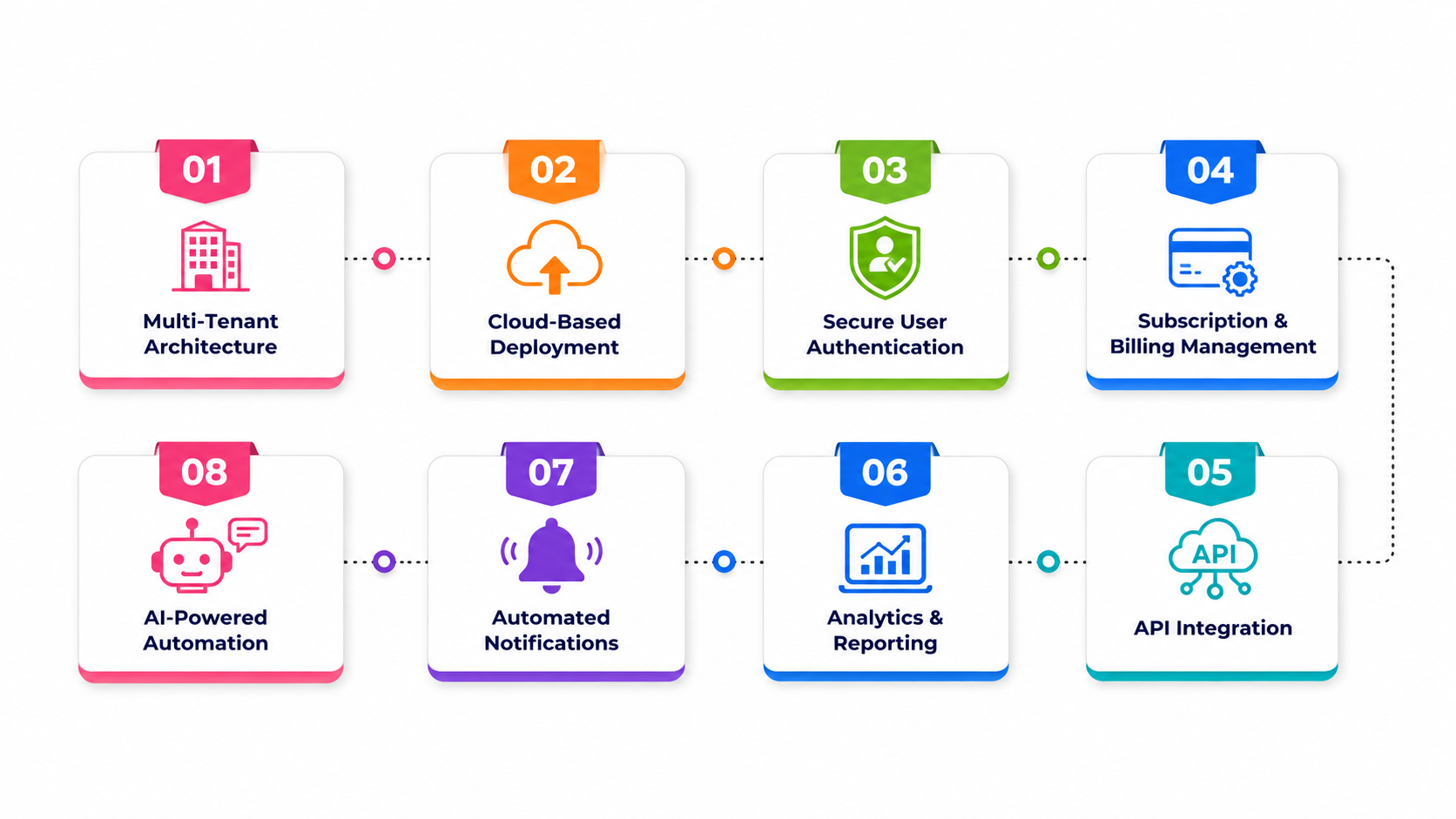
1. Multi-Tenant Architecture
Multi-tenant architecture is one of the defining characteristics of SaaS applications. It enables multiple customers, known as tenants, to use the same software application while ensuring that each customer's data remains completely isolated and secure.
2. Cloud-Based Deployment
Cloud-based deployment allows users to access SaaS applications securely from any location using an internet connection. By hosting applications on reliable cloud platforms such as jiWebHosting, AWS, Microsoft Azure, or Google Cloud, businesses benefit from automatic backups, disaster recovery, high availability, and seamless scalability.
3. Secure User Authentication
Security is a top priority for every SaaS application, especially when handling sensitive business and customer information. Modern SaaS platforms should implement secure user authentication methods such as multi-factor authentication (MFA), single sign-on (SSO), role-based access control (RBAC), OAuth integration, and encrypted password management.
4. Subscription and Billing Management
An efficient subscription and billing management system is essential for SaaS businesses operating on recurring revenue models. The application should support multiple pricing plans, automated recurring billing, invoice generation, payment gateway integration, coupon and discount management, free trial periods, and usage-based pricing.
5. API Integration
Modern businesses rely on multiple software tools to manage daily operations. A SaaS application should provide robust API integration capabilities that allow seamless connectivity with CRM platforms, ERP systems, accounting software, payment gateways, communication tools, marketing automation platforms, cloud storage services, and third-party AI solutions. Well-designed APIs improve workflow automation, eliminate data silos, and create a unified digital ecosystem for businesses.
6. Analytics and Reporting
Comprehensive analytics and reporting features enable businesses to make informed decisions based on real-time data. Interactive dashboards provide valuable insights into customer behavior, application performance, subscription trends, revenue growth, user engagement, and operational efficiency. Advanced reporting tools also help organizations identify opportunities for improvement, monitor key performance indicators (KPIs), and optimize business strategies.
7. Automated Notifications
Automated notifications play an important role in keeping users informed and engaged throughout their journey with the application. SaaS platforms should support email alerts, SMS notifications, in-app messages, and push notifications for important events such as account activities, subscription renewals, payment confirmations, password resets, task reminders, approvals, and product updates.
8. AI-Powered Automation
Artificial Intelligence has become a valuable addition to modern SaaS applications by enabling intelligent automation and personalized user experiences. AI-powered features such as predictive analytics, recommendation engines, virtual assistants, chatbots, workflow automation, fraud detection, document processing, and customer behavior analysis help businesses improve operational efficiency while delivering faster and smarter services.
SaaS Development Cost
The cost of developing a SaaS application depends on multiple factors, including project scope, UI/UX complexity, cloud infrastructure, security requirements, third-party integrations, AI capabilities, testing, deployment, and ongoing maintenance. A simple SaaS product can be developed relatively quickly, while enterprise-grade platforms with advanced features require larger investments.
Estimated SaaS Development Cost
SaaS Solution Type | Estimated Cost (USD) | Development Timeline |
Basic MVP SaaS Application | $20,000 – $40,000 | 2–4 Months |
Small Business SaaS Platform | $40,000 – $80,000 | 4–6 Months |
Medium Complexity SaaS Solution | $80,000 – $150,000 | 6–9 Months |
Enterprise SaaS Platform | $150,000 – $300,000+ | 9–15 Months |
AI-Powered Enterprise SaaS | $250,000 – $500,000+ | 12–18 Months |
Factors Affecting SaaS app Development Cost
The cost of developing a SaaS application depends on several technical, functional, and business-related factors. Every SaaS project has unique requirements, which influence the overall budget and development timeline. Understanding these factors helps businesses plan their investment more effectively and prioritize features that deliver the highest value. Below are the key elements that determine the cost of SaaS development.
1. Project Complexity and Features
The scope and complexity of your SaaS application have the greatest impact on development costs. A basic SaaS platform with limited functionality requires fewer resources, while enterprise-grade solutions with advanced workflows, AI capabilities, analytics, and automation demand significantly more development time and expertise.
2. UI/UX Design
An intuitive and visually appealing user interface enhances customer satisfaction and improves user retention. Custom dashboards, responsive layouts, interactive elements, and personalized user experiences require additional design and front-end development efforts, increasing the overall project cost.
3. Cloud Infrastructure
Choosing the right cloud platform, such as jiWebHosting, AWS, Microsoft Azure, or Google Cloud Platform, directly affects infrastructure expenses. Costs vary based on server configuration, storage requirements, bandwidth usage, load balancing, backup services, and scalability needs.
4. Security and Compliance Requirements
Applications that handle sensitive customer information require advanced security measures such as data encryption, multi-factor authentication, secure APIs, role-based access control, regular vulnerability testing, and compliance with standards like GDPR, HIPAA, or SOC 2. These requirements add to the development investment.
5. Third-Party API Integrations
Many SaaS platforms integrate with payment gateways, CRM systems, ERP software, communication tools, cloud storage, analytics platforms, and AI services. The number and complexity of these integrations influence both development time and overall project costs.
6. Multi-Tenant Architecture
A multi-tenant SaaS platform allows multiple customers to use a single application while maintaining complete data isolation. Designing and implementing this architecture requires careful planning, optimized database management, and scalable infrastructure, which increases development complexity.
Conclusion
As businesses continue embracing digital transformation, SaaS solutions have become the preferred approach for delivering scalable, secure, and cost-effective software. From startups launching innovative products to enterprises modernizing legacy systems, SaaS enables organizations to improve operational efficiency, reduce infrastructure costs, and create exceptional customer experiences.
Choosing the right SaaS development company is essential for building a successful cloud-based application. An experienced development partner understands business requirements, selects the right technology stack, implements robust security measures, and ensures your platform can scale as your customer base grows.
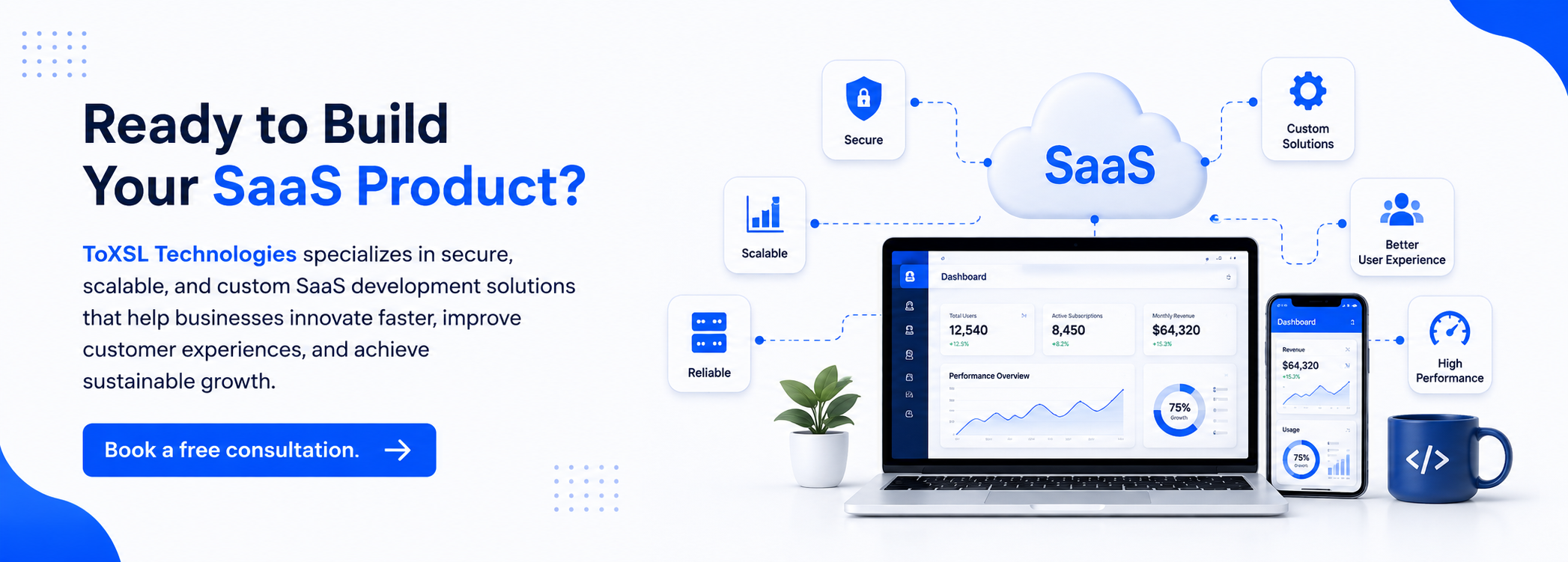
At ToXSL Technologies, we specialize in custom SaaS development services tailored to your unique business goals. Our experienced team develops secure, high-performance, and scalable SaaS applications using modern cloud technologies, agile methodologies, and industry best practices. Whether you need an MVP, enterprise SaaS platform, AI-powered software, or cloud migration services, we help transform your ideas into successful digital products. Contact us today.
Frequently Asked Questions
1. What is a SaaS development company?
A SaaS development company specializes in designing, developing, deploying, and maintaining cloud-based software applications that users access through the internet on a subscription basis.
2. How long does SaaS development take?
Development timelines vary depending on project complexity. A basic MVP typically takes 2–4 months, while enterprise-grade SaaS platforms may require 9–18 months.
3. Which industries benefit most from SaaS solutions?
Healthcare, finance, education, retail, logistics, manufacturing, real estate, HR, marketing, and eCommerce businesses all benefit significantly from SaaS applications.
4. What technologies are commonly used in SaaS development?
Popular technologies include React, Angular, Vue.js, Node.js, Python, Java, .NET, AWS, Microsoft Azure, Google Cloud, Kubernetes, Docker, PostgreSQL, and MongoDB.
5. Is SaaS more secure than traditional software?
Yes. Professional SaaS applications typically implement encryption, identity management, regular security updates, access controls, cloud security best practices, and compliance standards such as GDPR, HIPAA, or SOC 2 where applicable.
6. How much does custom SaaS development cost?
Depending on complexity, custom SaaS development typically ranges from $20,000 for an MVP to $500,000+ for enterprise-grade AI-powered SaaS platforms.
7. Why should I choose ToXSL Technologies for SaaS development?
ToXSL Technologies offers end-to-end SaaS development services, including business analysis, UI/UX design, cloud architecture, secure development, API integration, DevOps, quality assurance, deployment, and ongoing maintenance. Our focus on scalability, security, and innovation helps businesses launch reliable SaaS products that drive long-term growth.