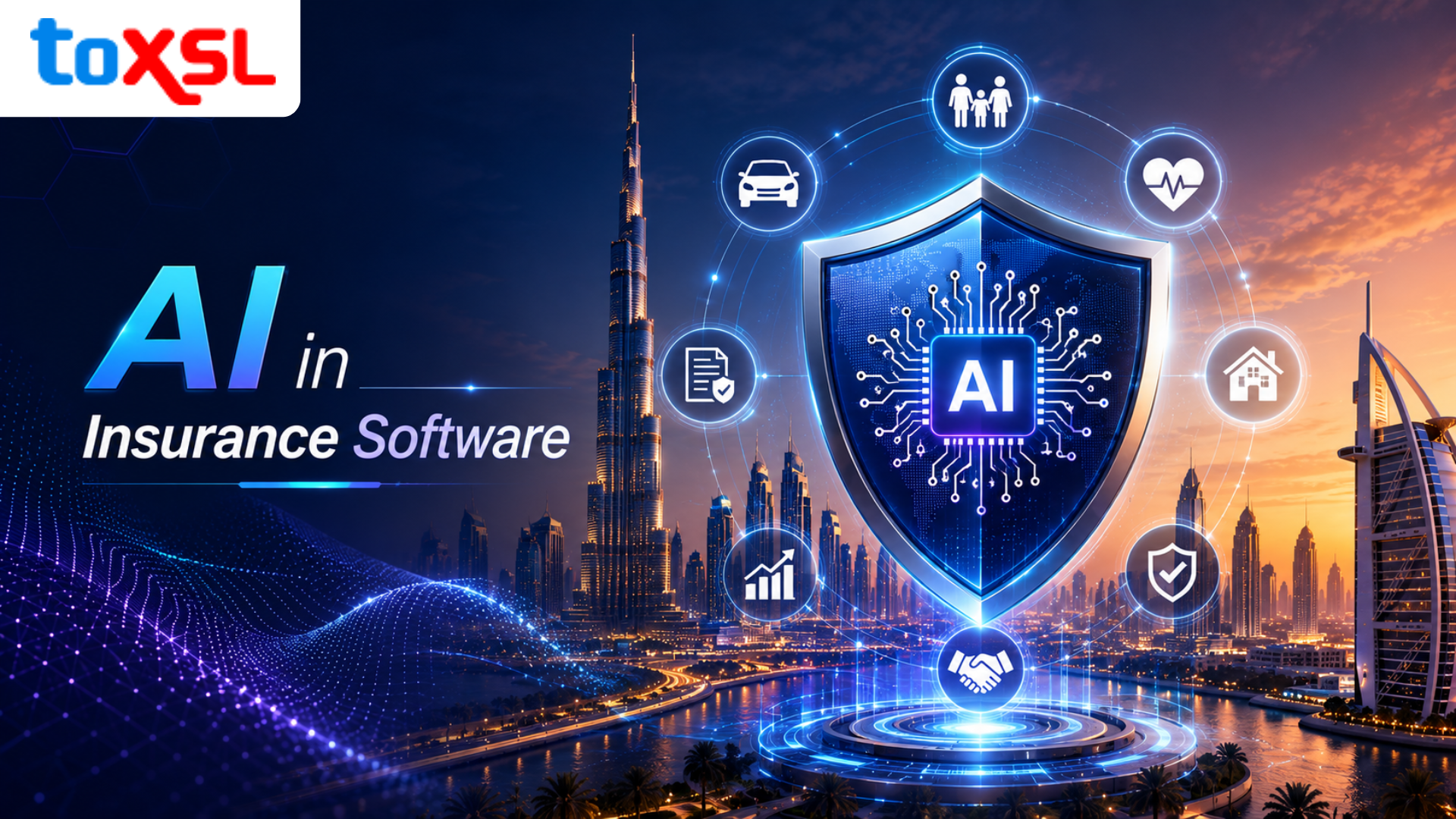
Artificial Intelligence (AI) is rapidly transforming the global insurance industry by improving operational efficiency, customer experience, and risk management capabilities. The global artificial intelligence (AI) in insurance market size is predicted to increase from USD 14.39 billion in 2026 to approximately USD 176.58 billion by 2035, representing a CAGR of 32.21% from 2026 to 2035.
In the UAE, insurance companies are increasingly adopting AI-powered insurance software to streamline claims processing, automate underwriting, detect fraud, and deliver personalized services. With the UAE’s strong focus on digital innovation and smart technologies, AI-driven insurance solutions are becoming essential for businesses aiming to stay competitive, scalable, and customer-centric in a fast-evolving market.
Key Insights
AI-powered insurance software helps automate claims management and underwriting processes.
UAE insurance companies are investing heavily in digital transformation technologies.
AI improves fraud detection through predictive analytics and machine learning models.
Personalized customer experiences are becoming easier with AI-based data analysis.
Chatbots and virtual assistants provide 24/7 customer support and faster responses.
Predictive analytics helps insurers reduce risks and improve decision-making accuracy.
AI in Insurance Software: Transforming Businesses in the UAE
The insurance sector in the UAE is undergoing a major technological transformation. Traditional insurance processes that once relied heavily on paperwork and manual operations are now becoming automated and data-driven with the help of AI software solutions.
Insurance companies are leveraging artificial intelligence to simplify complex operations, enhance customer engagement, and increase operational efficiency. AI technologies such as machine learning, natural language processing, robotic process automation, and predictive analytics are helping insurers optimize business performance while reducing operational costs.
In the UAE, businesses are focusing on digital innovation to meet rising customer expectations and improve service delivery. Customers now expect faster claims settlement, personalized services, and seamless digital experiences. AI enables insurance providers to meet these expectations through automation, intelligent decision-making, and real-time support systems.
The integration of AI into insurance software also allows companies to analyze large volumes of customer data, identify market trends, and develop more accurate risk assessment models. This helps insurers create better products while improving customer satisfaction and profitability. As digital transformation accelerates across the UAE, AI is becoming a critical component of modern insurance software solutions.
How AI is Revolutionizing the Insurance Industry in the UAE
AI technologies are redefining how insurance companies operate, interact with customers, and manage risks. From automation to predictive analytics, AI is helping UAE insurers build smarter and more efficient business models.
1. Automated Claims Processing
AI-powered systems automate claims verification and approval processes, reducing manual intervention and improving speed. Customers receive faster claim settlements, while insurers minimize paperwork and administrative costs through intelligent workflow automation and digital document processing technologies.
Speeds up insurance claim approvals
Reduces paperwork and manual errors
Improves customer satisfaction levels
Enhances operational efficiency
2. Fraud Detection and Prevention
Machine learning algorithms analyze large datasets to identify suspicious activities and fraudulent claims. AI systems help insurance companies detect unusual behavior patterns in real time, reducing financial losses and improving the accuracy of fraud investigations.
Analyzes customer behavior patterns
Reduces financial risks and losses
Improves investigation accuracy
Enhances insurance security systems
3. AI Chatbots and Virtual Assistants
AI chatbots provide instant customer support, policy information, and claim updates 24/7. These intelligent virtual assistants improve customer engagement by delivering quick responses, personalized recommendations, and seamless communication across digital platforms.
Offers 24/7 customer support
Provides instant query resolution
Improves customer engagement
Delivers personalized assistance
4. Personalized Insurance Policies
AI analyzes customer data, behavior, and preferences to create customized insurance policies. This personalized approach improves customer satisfaction while helping insurers offer relevant coverage options based on individual risk profiles and lifestyle habits.
Creates tailored insurance plans
Analyzes customer preferences effectively
Improves policy recommendations
Enhances customer retention rates
Supports data-driven personalization
5. Predictive Risk Assessment
AI-powered predictive analytics helps insurers assess potential risks more accurately. By analyzing historical and real-time data, insurance companies can make informed underwriting decisions and develop better risk management strategies for long-term profitability.
Improves underwriting accuracy
Identifies potential risks early
Uses real-time data analysis
Supports smarter business decisions
Enhances long-term profitability
6. Enhanced Customer Experience
AI-driven platforms improve customer interactions by offering faster services, self-service portals, and personalized communication. Insurance companies can strengthen customer relationships while increasing retention rates through convenient and efficient digital experiences.
Improves digital customer journeys
Enables self-service insurance portals
Provides faster policy services
Increases customer loyalty
Enhances overall user experience
Key Benefits of AI-Powered Insurance Software for Businesses
AI-powered insurance software is transforming the way businesses manage operations, customer services, and risk assessment. By integrating advanced technologies like machine learning, predictive analytics, and automation, insurance companies can improve efficiency, reduce operational costs, and deliver smarter customer experiences.
1. Improved Operational Efficiency
AI automates repetitive tasks such as data entry, document verification, and policy management. This helps insurance companies reduce manual workloads, improve productivity, and streamline daily operations while allowing employees to focus on strategic business activities and customer relationships.
Automates routine business tasks
Improves workflow management
Increases employee productivity
Streamlines insurance operations
2. Faster Decision-Making
AI systems process large amounts of customer and business data in real time, enabling insurers to make faster and more accurate decisions regarding underwriting, claims processing, and risk management for improved operational performance.
Enables real-time data analysis
Speeds up policy approvals
Improves underwriting accuracy
Supports smarter business decisions
3. Cost Reduction and Savings
AI-powered automation minimizes operational expenses by reducing paperwork, administrative tasks, and dependency on manual labor. Businesses can lower long-term costs while improving overall efficiency and maximizing profitability through optimized digital insurance processes.
Minimizes administrative workload
Lowers manual processing costs
Improves resource utilization
Enhances business profitability
4. Better Fraud Detection and Security
Machine learning algorithms analyze customer behavior and transaction patterns to identify suspicious activities. AI systems help insurers detect fraudulent claims quickly, reduce financial risks, and improve overall security within insurance operations and digital platforms.
Reduces insurance fraud risks
Enhances business security systems
Improves fraud investigation accuracy
Protects customer and company data
5. Enhanced Customer Experience
AI-driven insurance platforms provide personalized services, instant customer support, and seamless digital interactions. Customers receive faster responses, tailored policy recommendations, and convenient self-service options that improve satisfaction and strengthen long-term relationships.
Improves digital user experiences
Enables faster customer interactions
Increases customer satisfaction
Strengthens customer loyalty
Why UAE Insurance Companies Are Investing in AI-Driven Digital Transformation
The UAE insurance industry is rapidly adopting AI-driven digital transformation to improve operational efficiency, enhance customer experiences, and remain competitive in a technology-driven market. As customer expectations continue to evolve, insurance companies are investing in intelligent automation, predictive analytics, and digital platforms to streamline operations and deliver faster services.
1. Rising Customer Expectations
Modern customers expect quick responses, personalized services, and seamless digital experiences. AI-powered insurance platforms help companies meet these demands through automated support systems, mobile accessibility, and intelligent customer engagement solutions that improve overall satisfaction and convenience.
Delivers faster customer support
Improves digital customer experiences
Provides personalized insurance services
Enhances customer engagement levels
2. Increasing Market Competition
The UAE insurance market is becoming highly competitive, encouraging businesses to adopt AI technologies for operational improvement and service innovation. AI-driven solutions help companies offer smarter insurance products while maintaining efficiency and customer satisfaction.
Improves service innovation capabilities
Enhances operational efficiency
Supports faster business growth
Helps attract more customers
3. Government Support for Digital Innovation
The UAE government actively promotes artificial intelligence and digital transformation initiatives across industries. Supportive policies and smart city programs encourage insurance companies to invest in advanced technologies for improved business performance and long-term sustainability.
Supports smart business initiatives
Promotes digital transformation strategies
Strengthens innovation across industries
Enhances long-term business sustainability
4. Improved Risk Assessment and Management
AI-powered predictive analytics helps insurance companies analyze customer behavior, historical data, and market trends to assess risks more accurately. This enables businesses to make informed underwriting decisions and reduce financial uncertainties effectively.
Identifies risks in real time
Supports smarter decision-making
Reduces financial uncertainties
Enhances risk management strategies
5. Operational Cost Reduction
AI automation minimizes manual workloads, paperwork, and repetitive administrative tasks. Insurance companies can reduce operational costs significantly while improving workflow efficiency, productivity, and resource management through intelligent digital systems and automated processes.
Automates repetitive business tasks
Improves workflow efficiency
Optimizes resource management
Increases overall productivity
AI in Insurance Software: Cost and Factor Affecting Cost
The cost of developing AI-powered insurance software depends on multiple factors such as software complexity, AI integration, security requirements, customization, and cloud infrastructure. Businesses in the UAE are increasingly investing in AI-driven insurance solutions to improve efficiency, automate operations, and enhance customer experiences.
The development cost may vary depending on project size, features, and technology stack. Advanced functionalities like predictive analytics, AI chatbots, fraud detection, and automation tools can significantly influence the overall budget. Additionally, long-term maintenance, compliance requirements, and scalability planning also impact the final investment.
Choosing the right development partner helps businesses build secure, scalable, and cost-effective AI insurance software solutions tailored to modern market demands.
Software Type | Estimated Cost Range | Development Timeline |
Basic AI Insurance Software | $10,000 – $25,000 | 2 – 4 Months |
Medium-Scale AI Insurance Platform | $25,000 – $60,000 | 4 – 8 Months |
Enterprise AI Insurance Solution | $60,000 – $150,000+ | 8 – 12+ Months |
AI Chatbot Integration | $5,000 – $20,000 | 1 – 3 Months |
Fraud Detection System | $15,000 – $50,000 | 3 – 6 Months |
Predictive Analytics Integration | $20,000 – $70,000 | 4 – 7 Months |
Cloud-Based Insurance Platform | $25,000 – $100,000+ | 5 – 10 Months |
Let’ s dive deeper into the factors that are responsible for the cost.
Software Features and Complexity
The number and complexity of features directly impact software development costs. Advanced functionalities such as AI automation, predictive analytics, claims management, and customer portals require more development time, testing, and technical expertise.
Advanced features increase development cost
Complex workflows require additional resources
More integrations demand higher expertise
Custom functionalities extend timelines
Testing requirements become more extensive
AI Technology Integration
Integrating AI technologies like machine learning, natural language processing, and predictive analytics significantly affects project costs. Sophisticated AI models require high-quality datasets, skilled developers, and continuous optimization for accurate and efficient performance.
AI models require expert developers
Data training impacts project expenses
Machine learning integration adds complexity
Predictive analytics increases investment
Continuous AI optimization is essential
Customization Requirements
Custom-built insurance software designed according to specific business needs typically costs more than standard solutions. Personalized dashboards, workflows, reporting systems, and customer experiences require additional development efforts and technical customization.
Tailored solutions require more development
Custom dashboards increase project scope
Unique workflows demand extra coding
Personalized features improve usability
Business-specific needs raise overall cost
Security and Compliance Standards
Insurance software handles sensitive customer and financial data, making security a critical factor. Implementing data encryption, cybersecurity measures, and compliance with UAE regulations increases development and maintenance costs significantly.
Data security requires advanced protection
Compliance increases technical requirements
Encryption systems add development expenses
Cybersecurity testing is essential
Secure infrastructure improves reliability
Cloud Infrastructure and Scalability
Cloud-based insurance platforms require scalable infrastructure to support business growth and customer demand. Hosting, storage, server management, and performance optimization contribute to the total software development and maintenance budget.
Cloud hosting impacts operational costs
Scalable systems require advanced planning
Storage infrastructure increases investment
Performance optimization improves efficiency
Cloud security adds additional expenses
Maintenance and Future Upgrades
Regular maintenance, software updates, and AI model improvements are essential for long-term performance. Businesses must allocate budgets for technical support, bug fixes, feature upgrades, and evolving technology requirements after deployment.
Ongoing updates ensure smooth performance
Technical support adds recurring costs
AI systems require regular optimization
Bug fixes improve software stability
Future upgrades support business growth
Future Trends Shaping the AI-Powered Insurance Industry
The future of the insurance industry is being transformed by advanced AI technologies, automation, and data-driven innovation. Insurance companies in the UAE are increasingly adopting intelligent systems to improve customer experiences, enhance risk management, and streamline business operations.
Hyper-Personalized Insurance Services
AI will enable insurers to create highly personalized insurance policies based on customer behavior, preferences, and lifestyle data. This approach helps businesses deliver more relevant services while improving customer engagement and policy satisfaction significantly.
Advanced Predictive Analytics
Predictive analytics powered by AI will help insurance companies forecast customer needs, identify potential risks, and optimize business strategies through real-time data analysis and intelligent forecasting models.
AI-Powered Self-Service Platforms
Future insurance platforms will provide intelligent self-service options where customers can manage policies, claims, renewals, and support requests independently through AI-driven mobile apps and digital portals.
Blockchain and AI Integration
The integration of blockchain with AI technologies will improve transparency, data security, and fraud prevention in insurance operations. Smart contracts will help automate secure transactions and claims management processes efficiently.
Conversational AI and Voice Assistants
AI-powered voice assistants and conversational chatbots will transform customer interactions by providing instant support, policy guidance, and personalized communication through natural language processing technologies.
Real-Time Risk Monitoring Through IoT
AI combined with IoT devices will enable insurers to monitor risks in real time through connected systems and smart devices. This proactive approach helps businesses improve safety measures and prevent losses effectively.
Conclusion
AI is transforming the insurance industry in the UAE by improving operational efficiency, enhancing customer experiences, and enabling smarter business decisions. From predictive analytics and fraud detection to automated claims processing and personalized insurance services, AI-powered software is helping businesses stay competitive in the digital era. As the demand for intelligent insurance solutions continues to grow, companies must embrace innovation to achieve long-term success.
ToXSL Technologies is a leading AI App Development Company in the UAE, developing advanced AI-powered insurance software solutions tailored to modern business needs. With expertise in digital transformation and emerging technologies, ToXSL Technologies helps businesses build scalable, secure, and future-ready insurance platforms. Contact us to learn more.
Frequently Asked Questions
1. Why should insurance businesses invest in AI-powered software?
AI-powered insurance software helps businesses automate operations, improve customer experiences, reduce fraud risks, and optimize decision-making processes. It enables insurance companies to increase productivity while lowering operational costs and improving long-term business growth.
Reduces manual workloads
Improves customer satisfaction
Supports business scalability
Increases overall profitability
2. Can AI insurance software improve customer retention?
Yes, AI-powered insurance platforms provide personalized experiences, instant customer support, and faster services. These features improve customer engagement and satisfaction, helping businesses strengthen relationships and increase customer retention rates.
Delivers personalized customer experiences
Improves customer communication
Speeds up service delivery
Enhances customer loyalty
Strengthens long-term relationships
3. What types of insurance businesses can benefit from AI software?
Health insurance, life insurance, vehicle insurance, travel insurance, and property insurance companies can all benefit from AI-powered solutions to improve operations, customer experiences, and fraud prevention capabilities.
Suitable for multiple insurance sectors
Supports customized business operations
Improves claims management processes
Enhances customer engagement
Strengthens fraud detection systems
4. How secure is AI-powered insurance software for businesses?
Modern AI insurance software includes advanced security technologies such as encryption, secure cloud infrastructure, and cybersecurity protection to ensure the safety of customer and business data.
Protects sensitive information
Supports secure cloud systems
Reduces cybersecurity risks
Ensures regulatory compliance
Improves data protection standards
5. What is the ROI of implementing AI in insurance businesses?
AI implementation helps businesses reduce operational costs, improve efficiency, increase customer retention, and automate workflows, leading to higher profitability and long-term return on investment.
Improves operational efficiency
Reduces long-term business expenses
Increases customer satisfaction
Supports revenue growth
Delivers sustainable business value