The global mobile parking app market is experiencing rapid growth, driven by increasing urbanization, rising vehicle ownership, and the demand for smart mobility solutions. It is projected to reach $19.6 billion by 2034, expanding at a CAGR of 11.8% from 2026 to 2034.
This growth highlights the increasing adoption of digital parking solutions that enhance convenience, reduce congestion, and improve urban infrastructure. As cities evolve into smart ecosystems, AI-powered parking apps in Dubai are becoming essential tools for efficient space management, seamless user experiences, and sustainable transportation, creating significant opportunities for businesses and developers worldwide.
Key Takeaways
- AI-powered parking apps optimize space utilization and reduce traffic congestion.
- Real-time data and predictive analytics enhance user convenience and efficiency.
- Dubai’s smart city vision creates strong demand for intelligent parking solutions.
- Integration with IoT, GPS, and payment systems is essential for success.
- Investing in parking apps offers long-term scalability and recurring revenue opportunities.
Understanding AI-Powered Parking App
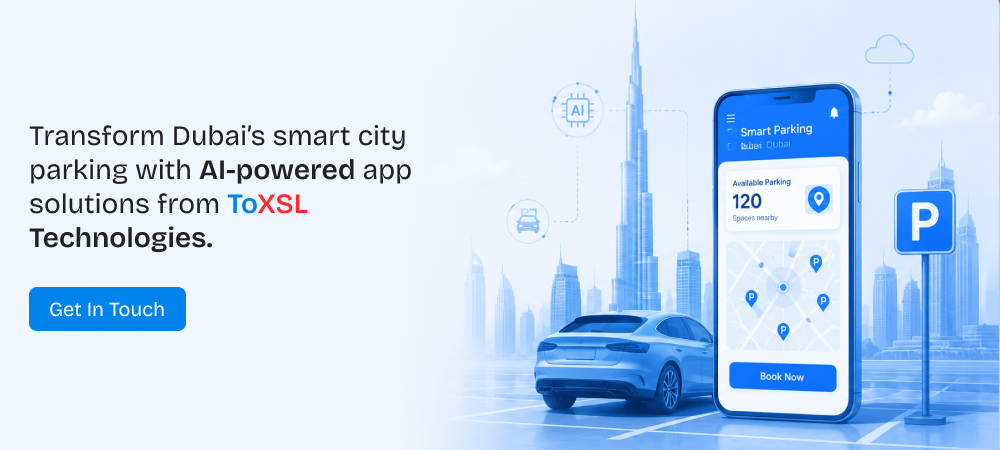
An AI-powered parking app is a smart digital platform that helps users locate, book, and pay for parking spaces efficiently. It uses technologies such as artificial intelligence, IoT sensors, GPS tracking, and cloud computing to provide real-time updates on parking availability.
These apps analyze historical and real-time data to predict parking demand, guide drivers to available spots, and even suggest optimal parking locations. Advanced systems can also include automated payments, license plate recognition, and dynamic pricing models, making the entire parking experience seamless and hassle-free.
Steps to Develop an AI-Powered Parking App
In this section, we will go through the various steps businesses must take to develop an AI-powered parking app in Dubai.
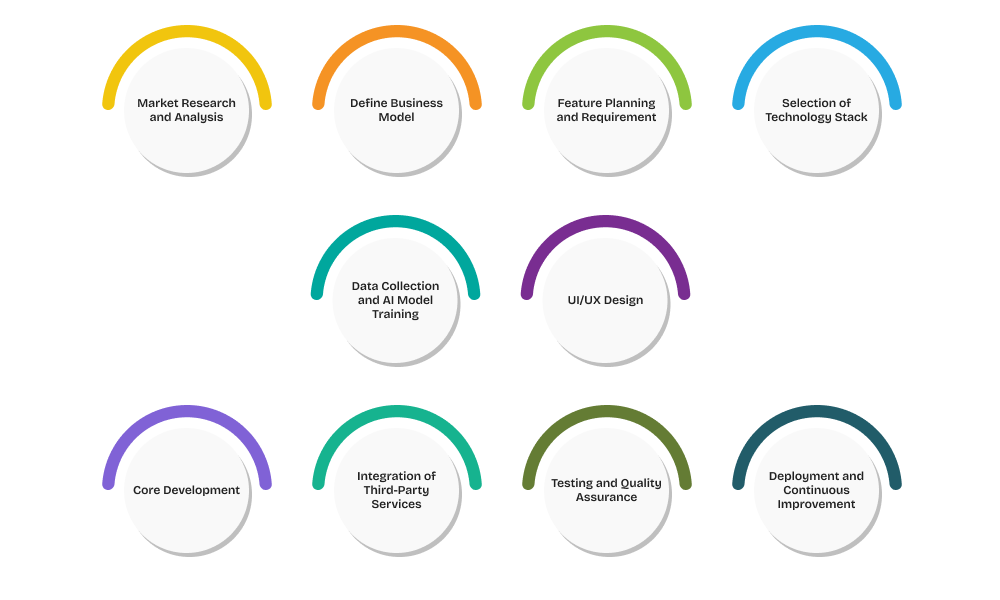
Market Research and Analysis:
Begin by conducting detailed market research to understand parking challenges, user expectations, and competitor offerings. Analyze traffic patterns, peak parking hours, and high-demand locations. Identify gaps in existing solutions and evaluate government smart city initiatives. This step helps validate your idea, define your target audience, and build a solution aligned with real-world urban mobility needs.
Define Business Model:
Clearly outline your business model, whether it is based on subscriptions, commissions, advertisements, or partnerships. Define the core objectives of your app, such as improving parking efficiency or generating revenue. Establish key performance indicators and success metrics to guide development and ensure your application meets both user needs and business goals effectively.
Feature Planning and Requirement:
List all essential and advanced features your AI-powered parking app will include, such as real-time tracking, booking, navigation, and AI predictions. Create detailed technical documentation covering workflows, user journeys, and system requirements. This step ensures clarity for developers, reduces confusion during development, and helps maintain a structured and efficient development process from start to finish.
Selection of Technology Stack:
Choose a reliable and scalable technology stack for your application. Use frameworks like Flutter or React Native for frontend development and Node.js or Python for backend systems. Select AI and machine learning tools such as TensorFlow. Opt for cloud platforms like AWS to handle data storage, processing, and scalability efficiently as your app grows.
Data Collection and AI Model Training:
Gather real-time and historical parking data through IoT sensors, cameras, and third-party APIs. Use this data to train machine learning models that predict parking availability and user behavior. Continuously refine algorithms to improve accuracy. High-quality data and well-trained models are essential for delivering reliable, intelligent, and efficient parking recommendations to users.
UI/UX Design:
Design an intuitive and visually appealing interface that simplifies the user journey. Focus on easy navigation, clear map integration, and minimal steps for booking parking spaces. Ensure accessibility and responsiveness across devices. A strong UI/UX design enhances user satisfaction, increases engagement, and encourages long-term adoption of your parking application.
Core Development:
Develop the frontend and backend components of the application simultaneously. Implement key features such as real-time parking updates, booking systems, and secure user authentication. Build a robust backend architecture capable of handling high traffic and large datasets. Ensure smooth communication between systems for optimal performance and reliability.
Integration of Third-Party Services:
Integrate essential services like GPS navigation, payment gateways, push notifications, and mapping tools. Connect IoT devices for real-time parking data collection. These integrations enhance app functionality and reduce development time. Proper API integration ensures seamless communication between different components, providing users with a smooth and efficient parking experience.
Testing and Quality Assurance:
Perform comprehensive testing, including functional, performance, and security testing. Identify bugs and fix issues to ensure smooth operation. Implement strong security measures such as encryption and secure payment processing. Ensure compliance with data protection regulations. A well-tested and secure application builds trust and delivers a reliable experience to users.
Deployment and Continuous Improvement:
Launch the application on major platforms like Android and iOS with a well-planned marketing strategy. Monitor performance, user feedback, and system behavior post-launch. Regularly update the app with new features, improvements, and bug fixes. Continuously enhance AI models using new data to keep the application efficient, competitive, and future-ready.
Key Features of the Parking App
Let us explore the various key features of a parking app and understand how they enhance user experience and efficiency.
Real-Time Parking Availability:
This feature allows users to view available parking spots instantly using live data collected from IoT sensors and integrated systems. It reduces the time spent searching for parking and minimizes traffic congestion. By providing accurate updates, users can make informed decisions and avoid unnecessary delays in busy urban areas.
AI-Based Predictive Analytics:
AI algorithms analyze historical data and current trends to predict parking availability in specific locations. This helps users plan their trips more efficiently by suggesting the best time and place to park. Predictive analytics also assists city planners in optimizing parking infrastructure and improving overall urban mobility.
Smart Navigation and Route Optimization:
The app provides turn-by-turn navigation to guide users to the nearest available parking space. It uses GPS and AI to recommend the fastest and least congested routes. This not only saves time but also reduces fuel consumption and enhances the overall driving experience in crowded city environments.
Online Booking and Reservations:
Users can reserve parking spaces in advance through the app, ensuring guaranteed availability upon arrival. This feature is especially useful in high-demand areas like malls, airports, and business districts. It eliminates uncertainty and provides convenience for both daily commuters and occasional users.
Secure Payment Integration:
The app supports multiple digital payment methods, including credit cards, mobile wallets, and contactless payments. Automated billing and digital receipts enhance transparency and convenience. Secure payment gateways ensure user data protection, building trust and encouraging wider adoption among users.
License Plate Recognition (LPR):
Using AI and computer vision, the app can automatically detect vehicle license plates for seamless entry and exit. This eliminates the need for manual ticketing systems and reduces waiting time. LPR technology enhances security, improves operational efficiency, and provides a frictionless parking experience.
Benefits of Parking App
Here are some key benefits of a parking app that businesses must know to enhance operational efficiency, improve customer experience, and stay competitive in today’s fast-paced digital environment.
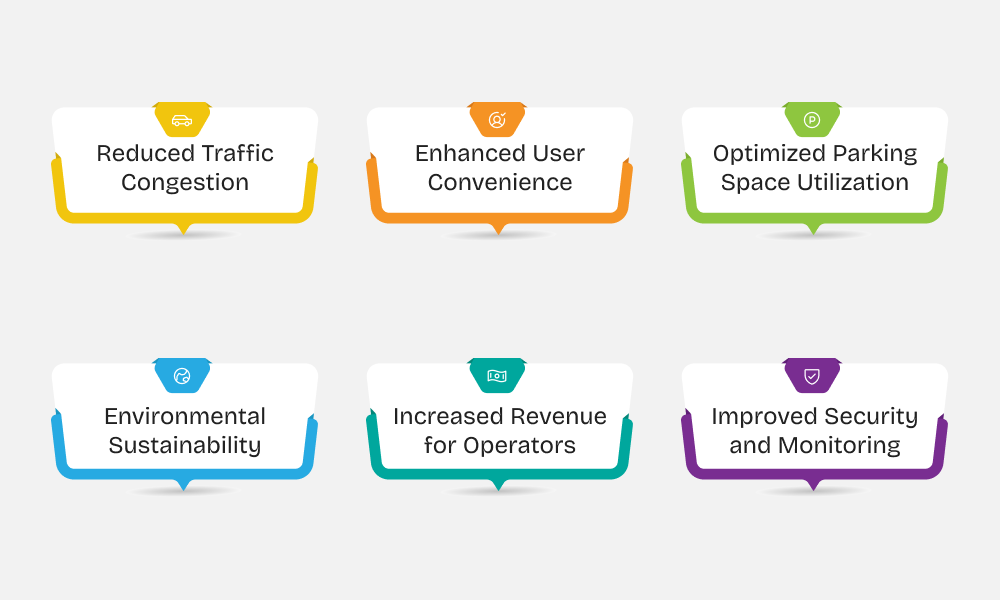
Reduced Traffic Congestion:
Parking apps significantly decrease the time drivers spend searching for parking spaces, which directly reduces traffic congestion in busy areas. By guiding users to available spots efficiently, these apps help improve traffic flow and minimize road blockages, contributing to a smoother and more organized urban transportation system.
Enhanced User Convenience:
Users can easily locate, book, and pay for parking spaces through a single platform, eliminating the hassle of manual searching. The convenience of real-time updates, navigation assistance, and digital payments ensures a stress-free experience, making daily commuting more efficient and enjoyable for drivers in urban environments.
Optimized Parking Space Utilization:
These apps ensure that parking spaces are used efficiently by providing real-time occupancy data. This prevents underutilization and overcrowding in certain areas. Smart allocation and management of parking resources help maximize revenue for parking operators while improving accessibility for users.
Environmental Sustainability:
By reducing the time spent driving in search of parking, AI-powered apps lower fuel consumption and carbon emissions. This contributes to a cleaner environment and supports Dubai’s sustainability goals. Efficient parking systems play a crucial role in creating eco-friendly and smart urban ecosystems.
Increased Revenue for Operators:
Parking app solutions enable dynamic pricing, better space management, and higher occupancy rates. This leads to increased revenue for parking operators and municipalities. Data insights also help in making informed business decisions and improving overall operational efficiency.
Improved Security and Monitoring:
Advanced technologies like surveillance integration and license plate recognition enhance security in parking areas. Users feel safer knowing their vehicles are monitored. Additionally, real-time tracking and data logging help in managing incidents and ensuring better control over parking facilities.
Top Reasons to Invest in Parking Apps
Let us shed some light on the top reasons to invest in a parking app, as it has become an essential solution for modern businesses looking to streamline parking operations, enhance user convenience, reduce traffic congestion, and maximize overall efficiency.
Growing Smart City Initiatives:
Dubai’s commitment to becoming a global smart city drives demand for innovative solutions like AI-based parking apps. Government support and infrastructure development create a favorable environment for businesses to invest in and scale smart parking technologies.
High Vehicle Density in Urban Areas:
With a rapidly increasing number of vehicles, parking demand continues to rise in Dubai. This creates a strong market need for efficient parking solutions, making it a lucrative opportunity for investors and businesses entering the smart mobility sector.
Technological Advancements:
The integration of AI, IoT, and cloud computing has made parking apps more efficient and scalable. These advancements enable developers to build highly intelligent systems that offer predictive insights, automation, and seamless user experiences, enhancing the overall value proposition.
Recurring Revenue Opportunities:
Parking apps generate continuous income through booking fees, subscriptions, advertisements, and partnerships. This recurring revenue model ensures long-term profitability and sustainability for businesses investing in smart parking solutions.
Improved Urban Mobility Solutions:
Investing in parking apps contributes to better traffic management and urban mobility. Efficient parking systems reduce congestion and improve transportation flow, aligning with modern city planning goals and enhancing the quality of life for residents.
Competitive Market Advantage:
Early investment in AI-powered parking solutions provides a competitive edge in a growing market. Businesses can establish strong brand recognition and capture a significant share of the market before it becomes saturated with competitors.
Parking App Development Cost
The cost of developing an AI-powered parking app depends on several factors, including app complexity, features, technology stack, integrations, and development team location. A basic app with essential features will cost less, while advanced AI-driven solutions with IoT integration and analytics will require a higher investment.
Component | Estimated Cost (USD) |
UI/UX Design | $3,000 – $8,000 |
Frontend Development | $8,000 – $20,000 |
Backend Development | $10,000 – $25,000 |
AI & Machine Learning Integration | $15,000 – $40,000 |
IoT & API Integrations | $8,000 – $20,000 |
Testing & Quality Assurance | $5,000 – $10,000 |
Maintenance (Annual) | $5,000 – $15,000 |
Total Estimated Cost: $50,000 – $150,000+
Conclusion
AI-powered parking apps are reshaping urban mobility by offering smarter, faster, and more efficient parking solutions. In a forward-thinking city like Dubai, these applications are not just a convenience but a necessity for managing increasing traffic and enhancing sustainability.
At ToXSL Technologies, we specialize in developing advanced AI-driven mobile applications tailored to modern smart city needs. Our expertise in cutting-edge technologies, scalable architectures, and user-centric design ensures the delivery of high-performance parking solutions that drive efficiency and profitability. Partner with us to build innovative parking systems that align with the future of urban living.
Frequently Asked Questions
1. What is an AI-powered parking app?
An AI-powered parking app is a smart solution that helps users find, reserve, and pay for parking spaces using real-time data, machine learning, and predictive analytics. It improves efficiency by guiding drivers to available spots and reducing search time.
2. How do AI parking apps work?
These apps use technologies like IoT sensors, GPS, and AI algorithms to collect and analyze parking data. They provide real-time updates, predict availability, and offer navigation assistance, ensuring users can quickly locate and access parking spaces.
3. What are the key features of a parking app?
Key features include real-time parking availability, AI-based predictions, navigation, online booking, secure payment integration, and license plate recognition. These features enhance user convenience and streamline parking operations.
4. How much does it cost to develop an AI parking app?
The development cost typically ranges from $50,000 to $150,000 or more, depending on features, complexity, AI integration, and third-party services. Advanced apps with IoT and predictive analytics may require higher investment.
5. Why should businesses invest in parking apps?
Parking apps offer strong revenue potential through bookings, subscriptions, and ads. They also support smart city initiatives, improve traffic management, and provide a competitive advantage in a growing digital mobility market.